Green technology — the application of science and engineering to create products, systems, and services that minimize environmental impact while meeting human needs — has moved from the margins of innovation to its center. Driven by the urgent realities of climate change, the declining cost of renewable energy, increasingly aggressive regulatory requirements, and growing investor and consumer pressure, clean technology has become one of the most significant areas of economic investment and innovation in the 21st century.
The scale of the transformation underway is unprecedented. In 2026, solar and wind energy are the cheapest sources of new electricity generation in virtually every market on earth — a revolution in energy economics that has occurred in barely a decade. Electric vehicles have achieved price parity with combustion vehicles in major markets. Hydrogen is emerging as an energy carrier for industrial applications that electricity cannot easily address. And climate technology investment has reached hundreds of billions of dollars annually, attracting the world's best engineers, scientists, and entrepreneurs to the challenge of decarbonizing the global economy.
The Climate Technology Revolution: Numbers and Context
Understanding where green technology stands in 2026 requires grounding in the underlying numbers. The IPCC's 1.5°C pathway requires global greenhouse gas emissions to be cut by approximately 43% by 2030 and reach net zero by 2050. Current policy trajectories fall significantly short of these targets, but the gap has narrowed substantially as clean technology costs have fallen and deployment has accelerated.
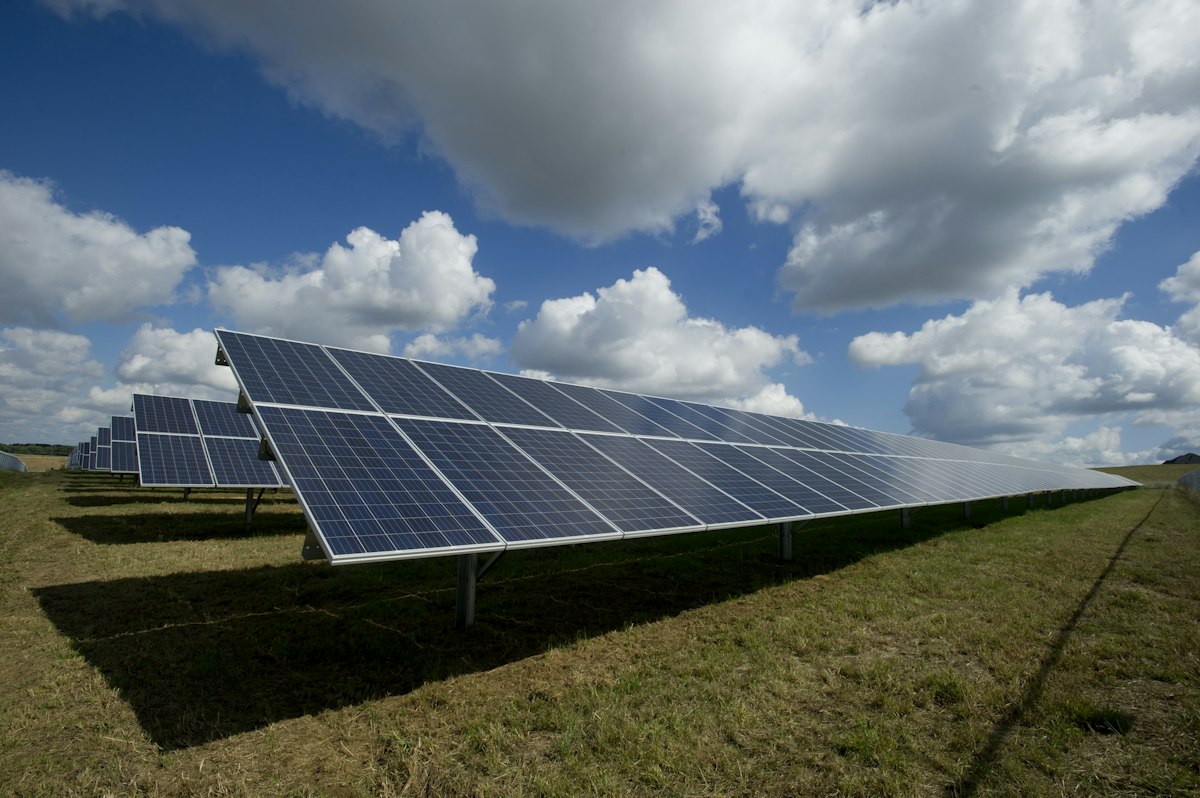
The most remarkable clean technology cost story of the past decade is solar photovoltaics. The cost of utility-scale solar power has fallen 90% since 2010, from $380 per megawatt-hour to below $40 per megawatt-hour in many markets — making solar the cheapest source of electricity generation in history. The learning curve that produced this cost reduction — with costs falling roughly 20% for every doubling of cumulative installed capacity — continues to drive costs down as global solar deployment grows. Wind power has followed a similar trajectory: offshore wind costs have fallen 60% in a decade, with further significant declines expected as the industry scales.
Battery costs have followed an analogous curve: lithium-ion battery pack costs fell from $1,200 per kilowatt-hour in 2010 to below $100 per kilowatt-hour by 2026, enabling both affordable electric vehicles and grid-scale energy storage systems that can store excess renewable generation and release it when needed. These cost reductions are the result of a virtuous cycle of investment, scale, learning, and competition that has made the economics of clean energy transformation compelling independent of climate policy.
Renewable Energy: The Energy Transition in Numbers
Solar Power: The Dominant Energy Technology
Solar power has become the world's most rapidly growing energy source and is on track to become the dominant source of global electricity generation. In 2025, global solar installations exceeded 500 gigawatts for the first time — more than all other energy sources combined in a single year. China alone installed more solar capacity than the total global installation in 2015, reflecting both the scale of China's energy demand growth and its dominant position in solar manufacturing.
Utility-scale solar farms — covering tens to thousands of acres with solar panels — have achieved grid parity (equal or lower cost than conventional generation) in virtually every sunny region globally. Rooftop solar has transformed the economics of home energy in markets with supportive policy, enabling homeowners to generate their own electricity and in many cases sell surplus power back to the grid. The emergence of agrivoltaics — combining solar panels with agricultural land use, enabling simultaneous energy generation and food production — is expanding the geography of solar deployment.
Next-generation solar technologies are pushing efficiency beyond the limits of conventional silicon panels. Perovskite solar cells — using a class of crystalline materials discovered to have remarkable photovoltaic properties — have achieved laboratory efficiencies above 30% (compared to ~22% for commercial silicon panels) and are approaching commercial viability. Tandem cells that stack different photovoltaic materials to capture different portions of the solar spectrum have demonstrated efficiencies above 40% in research settings. These improvements will further reduce the cost of solar generation by producing more electricity from the same area of panels.
Wind Energy: Offshore and Beyond
Wind energy has scaled dramatically over the past decade, with both onshore and offshore capacity growing rapidly. Offshore wind, while more expensive than onshore due to marine installation and foundation requirements, offers higher capacity factors (wind blows more consistently offshore than on land) and access to locations near population centers without land use conflicts.
Offshore wind turbines have grown to extraordinary scale: modern offshore turbines with blade spans of 220+ meters (larger than a football field) generate 12-15 megawatts each, enough to power several thousand homes. The UK, Denmark, Germany, the Netherlands, and China have established large offshore wind fleets; the US is developing significant offshore capacity off the Atlantic Coast. By 2030, global offshore wind capacity is projected to exceed 300 gigawatts, up from under 60 gigawatts in 2023.
Floating offshore wind is emerging as the next frontier: rather than fixed-bottom turbines anchored to the seabed (limited to depths below 60 meters), floating platforms can be deployed in deep water, accessing wind resources far from shore. Norway's Hywind project and multiple developments in Japan, South Korea, and Portugal are proving floating offshore wind's technical feasibility. Floating wind opens access to deep-water locations in the Pacific and Mediterranean where the highest wind resources exist, potentially dramatically expanding the global wind energy opportunity.

Energy Storage: Solving the Intermittency Challenge
Solar and wind are intermittent energy sources — they generate power only when the sun shines or wind blows. Scaling renewables to provide the majority of electricity supply requires storage technologies that can absorb excess generation and release it when needed, filling the gaps when renewables can't generate.
Lithium-ion batteries have become the dominant short-duration storage technology: battery storage systems (grid-scale) ranging from tens of megawatts to gigawatts are being deployed alongside renewable energy plants globally. California, Texas, Australia, UK, and China have all deployed gigawatt-scale battery storage systems that provide grid stability and enable higher renewable penetration. Battery storage costs continue to fall rapidly: as battery demand from EVs drives manufacturing scale, grid-scale battery costs benefit from the same learning curves.
For longer-duration storage — storing energy for days or weeks to compensate for seasonal renewable variation — different technologies are needed. Pumped hydro (the existing workhorse of long-duration storage) uses excess electricity to pump water uphill and releases it through turbines when power is needed. Flow batteries (using liquid electrolytes stored in external tanks, enabling energy capacity to be scaled independently of power) are commercializing for 4-12 hour storage. Iron-air batteries (using the rusting and de-rusting of iron) promise low-cost, long-duration storage using abundant materials. Green hydrogen — producing hydrogen by electrolyzing water with renewable electricity and storing it as a fuel — addresses seasonal storage at large scale.
Electric Vehicles: The Transportation Revolution
Electric vehicles have moved from early-adopter niche to mass market product in most major economies. By 2026, EVs represent over 30% of new car sales globally, with markets like China (over 45% EV share), Norway (over 90%), and the UK, Germany, France, and Netherlands all above 25%. The US market has been slower to transition but is accelerating as federal incentives, expanding charging infrastructure, and expanding model availability drive adoption.
The fundamental economics of EVs have shifted decisively in their favor. Battery cost reductions have brought EV purchase prices to parity with comparable internal combustion vehicles in most segments — without factoring in the significantly lower operating costs (electricity is cheaper per mile than gasoline; EVs require far less maintenance). Total cost of ownership for EVs is now lower than combustion vehicles across most vehicle segments and usage profiles.
Charging Infrastructure: The Buildout Continues
The expansion of public charging infrastructure has addressed one of the primary consumer concerns about EV adoption. In the US, the National Electric Vehicle Infrastructure (NEVI) program's $7.5 billion investment is funding a nationwide network of fast chargers at highway exit intervals. Tesla's Supercharger network has opened to non-Tesla vehicles in most markets. Major charging networks (Electrify America, ChargePoint, EVgo) continue expanding coverage, particularly in urban areas and highway corridors.
The introduction of 800-volt charging architectures (adopted by Hyundai/Kia Ioniq and EV6 platforms, Porsche Taycan, Mercedes EQS, and others) enables charging speeds up to 350 kilowatts, replenishing significant range in 10-15 minutes — approaching the time of a gasoline fill-up. As these platforms become more widespread and ultra-fast charging infrastructure proliferates, the time-cost of EV charging will cease to be a meaningful consumer objection.
Commercial EVs: Trucks, Buses, and Fleets
Electrification is extending beyond passenger vehicles to commercial transportation, where it faces different challenges and timelines. Urban delivery vehicles are natural early EV adopters: predictable daily routes, depot charging, and favorable total cost of ownership have driven rapid adoption. Amazon, UPS, FedEx, and most major delivery companies have committed to full fleet electrification and are actively deploying electric delivery vans.
Long-haul trucking presents greater challenges: the energy requirements for cross-country freight necessitate either very large (and expensive) battery packs or a mature charging network that enables frequent charging stops. Tesla Semi, Freightliner eCascadia, and Volvo FH Electric are early commercial deployments; the economics are challenging at current battery costs for long-haul applications. Hydrogen fuel cells are being positioned as an alternative for long-haul trucking by Nikola, Hyundai, and Daimler Truck, offering the fueling time and energy density advantages of hydrogen without the weight penalty of very large battery packs.
Hydrogen: The Fuel of the Future for Hard-to-Electrify Sectors
Green hydrogen — produced by electrolyzing water with renewable electricity — has emerged as the leading pathway to decarbonizing industrial processes that are difficult or impossible to electrify directly: high-temperature industrial heat (steel, cement, chemicals), long-distance freight shipping, aviation, and seasonal energy storage.
Steel production is responsible for approximately 8% of global CO2 emissions, with most emissions coming from the blast furnace process that uses coal both as a fuel and as a chemical reducing agent to convert iron ore to iron. Green hydrogen can replace coal in steel production: hydrogen-based direct reduced iron (DRI) using green hydrogen produces water vapor instead of CO2. SSAB in Sweden, ArcelorMittal in multiple locations, and thyssenkrupp in Germany are leading the transition to green hydrogen steel production, with first commercial-scale plants operational or under construction by 2026.
Green ammonia — using green hydrogen to produce ammonia for fertilizer production — is another major near-term application. Conventional ammonia production (the Haber-Bosch process) uses natural gas as a feedstock, producing significant CO2. Green ammonia substitutes green hydrogen, enabling zero-carbon fertilizer production at scale. Given that fertilizer production consumes approximately 1% of global energy and is responsible for significant greenhouse gas emissions, the transition to green ammonia has substantial climate impact potential.
Carbon Capture and Removal: Cleaning Up Past Emissions
Even with aggressive decarbonization of energy, transportation, and industry, achieving net-zero emissions by 2050 will likely require significant carbon removal — capturing CO2 from the atmosphere and storing it permanently. The IPCC's 1.5°C scenarios include 2-10 gigatons of carbon dioxide removal annually by 2050.
Nature-based carbon removal — reforestation, forest protection, soil carbon sequestration, ocean carbon uptake — offers significant near-term capacity but faces questions about permanence (forests burn; sequestered carbon can be released by disturbance) and scalability. Technology-based carbon removal offers greater permanence at higher cost.
Direct Air Capture (DAC) uses chemical processes to capture CO2 directly from ambient air. Climeworks (Switzerland) and Carbon Engineering (acquired by Oxy Low Carbon Ventures) have deployed commercial DAC plants and are scaling to larger facilities. Stratos, Carbon Engineering's first large-scale DAC facility in Texas, is designed to capture 500,000 tons of CO2 per year — a small fraction of what is needed but an important scale milestone. DAC costs currently range from $400-1,000 per ton of CO2, compared to the $50-100 per ton that most economic analyses suggest is required for DAC to be deployed at scale. Continued cost reduction through process improvements, larger scale, and learning by doing is essential — and historical parallels (solar, wind) suggest it is achievable.
Green Buildings and Smart Energy Systems
Buildings account for approximately 40% of global energy consumption and 33% of greenhouse gas emissions, making building energy efficiency and electrification critical decarbonization levers. Green building technology encompasses insulation and passive design that minimizes heating and cooling demand, heat pumps that provide efficient electric heating and cooling, building automation systems that optimize energy use, smart windows that dynamically control solar heat gain, and integrated solar panels and battery storage that enable energy self-sufficiency.
Heat pumps — devices that move heat from air, water, or ground into buildings using electricity — are the leading technology for building heating decarbonization. Modern air-source heat pumps operate efficiently even in very cold climates (modern cold-climate heat pumps maintain efficiency at temperatures below -15°C), enabling electric heating replacement of gas or oil furnaces with significant energy savings and emissions reduction. The IEA estimates that switching all global buildings to heat pumps would reduce CO2 emissions by 0.8 gigatons annually.
Smart building systems use sensors, IoT, and AI to optimize energy consumption in real time: adjusting HVAC based on occupancy and weather forecasts; coordinating EV charging to avoid peak demand periods; managing battery storage to minimize grid energy costs; and controlling lighting based on natural light levels and occupancy. These systems can reduce building energy consumption by 20-30% with minimal capital investment, representing among the most cost-effective climate mitigation opportunities available.
The Green Finance Revolution
The capital required for the energy transition is enormous: the IEA estimates that achieving net-zero emissions by 2050 requires clean energy investment to triple to approximately $4 trillion annually by the early 2030s. The good news is that capital markets are moving rapidly to mobilize this investment.
Green bonds — fixed-income instruments where proceeds are committed to green projects — have grown from essentially nothing in 2008 to over $1 trillion of annual issuance by 2026. ESG (Environmental, Social, Governance) investing has integrated climate considerations into mainstream investment analysis, with climate risk disclosure requirements from regulators in the EU, UK, and increasingly the US compelling listed companies to report emissions and climate transition plans. Carbon markets — both regulatory cap-and-trade systems (EU ETS, California cap-and-trade) and voluntary carbon markets — create financial incentives for emissions reductions, directing capital toward cost-effective decarbonization opportunities.
Transition finance — financing the transformation of high-carbon industries toward lower-carbon operation — is increasingly recognized as essential: simply excluding fossil fuel companies from green portfolios doesn't reduce emissions, whereas financing their transition to lower-carbon operations does. The taxonomy of what counts as "green" continues to evolve, with ongoing debate about what role, if any, natural gas and nuclear energy should play in the transition.
Conclusion: The Clean Technology Imperative
Green technology in 2026 represents humanity's most consequential technological undertaking: the decarbonization of a global economy built over two centuries on fossil fuels, within a timeframe of decades, without sacrificing the prosperity and development that energy enables.
The good news is that the tools to accomplish this transformation exist, their costs have fallen dramatically, and the economic incentives increasingly favor adoption. Solar and wind are the cheapest electricity sources in history. EVs are approaching price parity with combustion vehicles. Heat pumps are commercially viable alternatives to gas heating. Green hydrogen is beginning its cost reduction curve. The challenge is deployment at sufficient scale and speed — and the deployment is accelerating.
Organizations and investors that understand the trajectory of green technology — where costs are heading, which technologies will scale, which regulatory frameworks are shaping markets — are positioning themselves for the enormous economic opportunity that the clean energy transition represents. The companies, regions, and nations that lead the clean technology revolution will define the economic geography of the mid-21st century.



Comments
Post a Comment