Metaverse and Web3 in 2026: Complete Guide to DeFi, NFTs, Blockchain Technology, DAOs, and the Future of Decentralized Internet
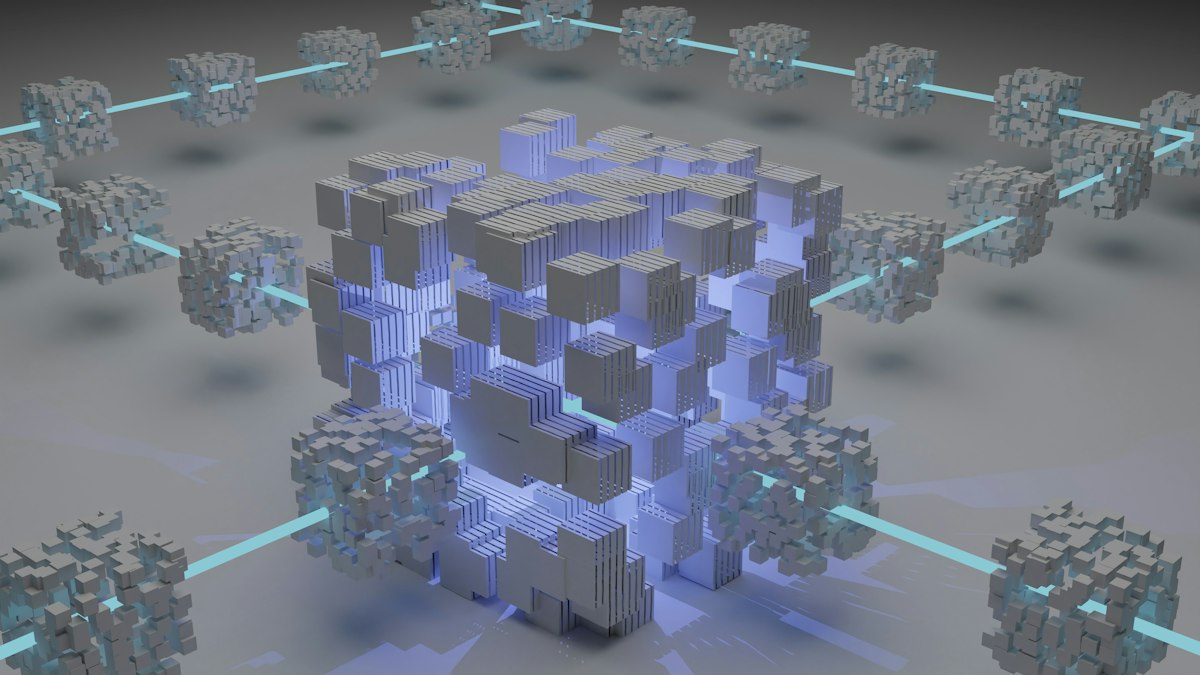
The internet is undergoing its most fundamental transformation since the invention of the World Wide Web. Web3 — the decentralized, blockchain-powered successor to today's platform-dominated internet — promises to shift ownership, control, and value creation from corporations to users. The metaverse offers persistent, immersive virtual worlds where people work, play, and socialize. DeFi is rebuilding financial infrastructure without banks. NFTs are redefining digital ownership. DAOs are experimenting with new forms of human coordination. Together, these technologies represent not just a technical evolution but a philosophical reimagining of how the internet should work.
Yet 2026 looks nothing like the breathless predictions of 2021-2022. The crypto winter of 2022-2023 wiped out trillions in value, collapsed major projects, and sent developers and users fleeing. The NFT market, once generating billions monthly, contracted by over 95%. Meta's metaverse ambitions consumed $40+ billion with limited consumer adoption. Many promised "Web3 revolutions" quietly shuttered. But beneath the hype collapse, genuine infrastructure has been built, real use cases have emerged, and the technology has matured in ways that matter.
This comprehensive guide cuts through the noise to give you an honest, technically grounded view of Web3, DeFi, NFTs, the metaverse, blockchain technology, DAOs, and the decentralized internet as they actually exist in 2026 — what works, what failed, what's still being figured out, and what's genuinely coming next.
Understanding Web3: The Decentralized Internet Stack
Web3 refers to a vision of the internet built on decentralized protocols — primarily blockchains — where users own their data, identity, and digital assets rather than delegating that ownership to platform companies. The term was coined by Ethereum co-founder Gavin Wood in 2014, though it entered mainstream consciousness during the 2021 crypto bull market.
The Web3 stack has several distinct layers. At the base are Layer 1 blockchains: the foundational networks that process and finalize transactions. Ethereum remains the dominant smart contract platform, handling the majority of DeFi value and NFT activity despite high fees during peak demand. Bitcoin remains the dominant store-of-value blockchain. Solana offers high throughput (65,000+ TPS theoretical) and low fees, making it the preferred chain for high-frequency applications and gaming. Other notable L1s include Avalanche, Near, Cosmos, and Polkadot.
Layer 2 networks sit on top of L1 blockchains, inheriting their security while dramatically increasing throughput and reducing costs. Ethereum's L2 ecosystem has become the primary execution layer for most applications. Arbitrum and Optimism lead in Total Value Locked (TVL) among optimistic rollups. ZK-rollups — using zero-knowledge proofs to batch transactions — have matured significantly, with zkSync Era, Starknet, and Polygon zkEVM processing millions of transactions daily at costs measured in fractions of cents.
The wallet layer provides users their keys to Web3. MetaMask remains the dominant browser wallet with 30M+ monthly active users. Mobile wallets (Coinbase Wallet, Rainbow, Phantom for Solana) have driven consumer adoption. Hardware wallets (Ledger, Trezor) secure significant assets offline. Account abstraction — standardized in EIP-4337 — enables smart contract wallets with features like social recovery, gas sponsorship, and batch transactions, removing the private key management burden that has always been Web3's worst UX problem.
The application layer includes DeFi protocols, NFT marketplaces, games, social platforms, and DAOs — anything built on top of the infrastructure layers. The data layer includes decentralized storage (IPFS, Arweave, Filecoin), indexing (The Graph), and oracles (Chainlink) that connect blockchains to real-world data.
DeFi: Rebuilding Finance on Blockchains
Decentralized Finance (DeFi) is the most consequential application of blockchain technology to date. DeFi protocols replicate — and in some cases improve upon — the functions of traditional financial institutions using smart contracts: lending, borrowing, trading, derivatives, insurance, and yield generation, all without banks, brokers, or centralized custodians.
Decentralized Exchanges and Automated Market Makers
The DEX (Decentralized Exchange) is DeFi's foundational primitive. Rather than matching buy and sell orders in an order book, most DEXs use Automated Market Makers (AMMs) — mathematical formulas that determine prices based on the ratio of assets in a liquidity pool.
Uniswap pioneered the constant-product AMM (x*y=k), where the product of two token reserves remains constant. Uniswap v3 introduced concentrated liquidity, allowing liquidity providers to allocate capital to specific price ranges rather than uniformly across all prices — dramatically improving capital efficiency. Uniswap v4 (launched 2024) introduced "hooks" — customizable logic that executes before/after swaps, enabling dynamic fees, TWAP oracles, and fully custom AMM designs built on the same liquidity infrastructure.
Curve Finance specializes in stablecoin and similar-asset swaps using a hybrid AMM that minimizes slippage for assets that should trade near parity. Curve's deep stablecoin liquidity makes it critical infrastructure for DeFi, and veCRV (vote-escrowed CRV) pioneered the "ve-tokenomics" model where locking tokens earns voting power over protocol fee distribution — a governance model widely copied across DeFi.
Lending and Borrowing Protocols
Aave and Compound defined the DeFi lending model: users deposit collateral to borrow other assets, with interest rates algorithmically determined by supply and demand. Aave v3 introduced cross-chain portals (moving assets between chains), isolation mode (limiting risk for new collateral types), and efficiency mode (higher LTVs for correlated assets).
Flash loans — uncollateralized loans that must be borrowed and repaid within a single transaction — have become one of DeFi's most distinctive primitives. Flash loans enable: liquidating undercollateralized positions across multiple protocols in one transaction; arbitraging price differences across DEXs; collateral swapping (replacing USDC collateral with ETH without closing the loan). They also enable sophisticated attacks — when exploited, flash loans allow attackers to manipulate oracle prices and drain protocol funds in a single transaction.
The DeFi Ecosystem in 2026
After the 2022 collapse (UST/Terra implosion, Three Arrows Capital bankruptcy, FTX fraud), DeFi has rebuilt on more solid foundations. Total Value Locked (TVL) across DeFi has recovered to meaningful levels, with Ethereum and its L2s commanding the majority. Key developments include:
Real-World Assets (RWAs) have become DeFi's fastest-growing category. Protocols like Maple Finance, Centrifuge, and MakerDAO have onboarded tokenized US Treasuries, corporate credit, and real estate as DeFi collateral, bringing billions in traditional finance yield on-chain. BlackRock's BUIDL fund — a tokenized money market fund on Ethereum — legitimized institutional participation in on-chain finance.
Decentralized Stablecoins have evolved past the algorithmic failures of UST. DAI (now rebranded to USDS by MakerDAO's Spark Protocol) is backed by a mix of USDC, ETH, and RWAs. Liquity's LUSD maintains USD peg through a clever redemption mechanism. Ethena's USDe generates yield through delta-neutral ETH derivatives positions — controversial but battle-tested. Circle's USDC and Tether's USDT remain dominant by market cap, though they represent centralized risks in an otherwise decentralized ecosystem.
Perpetual DEXs have emerged as significant DeFi applications. GMX, dYdX, and Hyperliquid offer leveraged trading (up to 50x) on decentralized infrastructure. dYdX v4 moved its entire stack to an app-specific Cosmos chain for performance. Hyperliquid built a custom L1 optimized specifically for perpetual futures, achieving performance rivaling centralized exchanges while maintaining on-chain settlement.
NFTs: Digital Ownership Beyond the Hype
Non-Fungible Tokens (NFTs) represent unique digital assets on a blockchain. Unlike cryptocurrencies (fungible — one BTC equals any other BTC), each NFT is distinct and verifiably scarce. The underlying technology is straightforward: an NFT is a token on a blockchain (usually Ethereum or Solana) with a unique ID and metadata pointing to an asset (image, video, music, game item, etc.).
The 2021 NFT boom was extraordinary in scope and speed. CryptoPunks traded for millions. Bored Ape Yacht Club NFTs became status symbols for celebrities and athletes. Axie Infinity generated hundreds of millions in monthly volume. The total NFT market peaked at over $17 billion in monthly trading volume in January 2022. Then the crash came: by 2023, monthly trading volume had fallen 97%+. Many NFT projects lost 90-99% of their value. Millions of retail investors suffered significant losses.
What survived the collapse? Projects with genuine communities and utility have maintained value. CryptoPunks and early Bored Apes remain cultural artifacts with floor prices in the hundreds of thousands, held by collectors treating them like blue-chip art. But the speculative mania is gone.
NFT Use Cases That Actually Work
Digital art and collectibles remain the largest NFT category, but the market is far more discerning. Platforms like Foundation, SuperRare, and Art Blocks have built sustainable ecosystems around verified digital artists. Art Blocks' generative art — algorithmically created pieces where the artwork is generated at mint time — has produced some of the most sought-after digital art, with works by Tyler Hobbs and others trading for significant sums.
Gaming NFTs struggled when "play-to-earn" (P2E) models collapsed (Axie Infinity's SLP token inflation crisis was the defining example), but "play-and-own" models have shown more promise. Games where NFTs represent genuine in-game items — cosmetics, characters, land — that players own and can trade are finding audiences. Illuvium, Guild of Guardians, and others have shipped games with meaningful NFT economies, though player numbers remain small compared to traditional gaming.
Music NFTs have enabled artists to sell directly to fans, with Royal and Sound.xyz platforms allowing fans to own shares of song royalties. While the market is niche, it represents a genuine disintermediation of streaming platforms that pay artists fractions of cents per stream.
Event tickets as NFTs solve real problems: eliminating scalping through programmable royalties, enabling artists to capture secondary market value, and creating verifiable attendance records. GET Protocol has processed millions of NFT tickets for concerts and events.
Domain names as NFTs (Ethereum Name Service — ENS, Unstoppable Domains) provide human-readable blockchain addresses (vitalik.eth instead of 0x1234...) and are the closest thing to genuinely useful consumer NFTs, with millions of registrations.
The Metaverse: From Hype to Reality
The "metaverse" — a persistent, immersive virtual world accessible via AR/VR headsets — was the dominant tech narrative of 2021-2022. Mark Zuckerberg renamed Facebook to Meta and committed tens of billions to building it. Every major tech company announced metaverse initiatives. Then reality intervened.
Meta's Horizon Worlds launched in 2021 with fanfare and has struggled with low engagement. Leaked metrics showed fewer than 200,000 monthly active users by 2022, far below internal targets. The avatars lacked legs (a meme that captured public ridicule). By 2025, Meta had pivoted significantly toward AI, though Quest headsets continue to sell reasonably well and Horizon has improved.
Apple's Vision Pro, launched in 2024, represents a technically impressive spatial computing device — but at $3,500+, it's a developer and enterprise tool, not a consumer metaverse platform. Its "spatial computing" framing deliberately avoids the metaverse label. Impressive for watching 3D video, video calls, and productivity; insufficient consumer applications for its price.
Where the metaverse is actually working: gaming. Fortnite, Roblox, and Minecraft have tens of millions of daily active users in persistent virtual worlds with social features, creator economies, and live events. Roblox — the closest thing to a functioning metaverse — hosts concerts, brand activations, and user-generated experiences at genuine scale. These platforms predate the metaverse hype and succeeded by building for fun, not for blockchain ideology.

Blockchain-based virtual worlds (Decentraland, The Sandbox) saw land prices reach millions at peak hype. By 2024, daily active users in Decentraland numbered in the hundreds to low thousands — tiny numbers for "metaverse" platforms that raised and spent hundreds of millions. The technology works; the user demand is not yet there.
Ethereum: The Programmable Blockchain
Ethereum remains the dominant smart contract platform and the heart of the DeFi/NFT ecosystem. The Merge (September 2022) transitioned Ethereum from Proof of Work to Proof of Stake, reducing its energy consumption by ~99.95% and making it one of the greenest major blockchains. Post-Merge Ethereum is deflationary when network usage exceeds a threshold — EIP-1559 burns base fees, and combined with staking rewards, ETH can have negative net issuance during high-activity periods.
Ethereum's Scaling Journey
The Dencun upgrade (March 2024) implemented EIP-4844 (proto-danksharding), introducing "blobs" — a new data availability layer that dramatically reduced L2 transaction costs. After Dencun, L2 transaction fees dropped 10-100x: a Uniswap swap on Arbitrum or Optimism went from $0.50-$2.00 to $0.01-$0.10. This made Ethereum L2s genuinely competitive with centralized alternatives for everyday transactions.
The roadmap continues. Full danksharding (planned) will increase blob capacity further, eventually enabling thousands of L2s to post data cheaply. The Verge (introducing Verkle trees for stateless clients) will reduce node requirements and improve decentralization. The Purge (reducing historical data burden) will simplify the protocol. Ethereum's technical roadmap is methodical and ambitious — but slow, measured in years.
Smart Contract Development
Solidity remains the dominant smart contract language, but the development toolchain has evolved significantly. Foundry (Forge + Cast + Anvil) has largely displaced Hardhat as the preferred development framework for serious smart contract engineers — it's written in Rust, dramatically faster than JavaScript-based alternatives, and provides native Solidity testing.
Security has improved through bitter experience. The ecosystem has paid billions in losses to hacks, and that pain has driven better practices: formal verification (Certora, Halmos), fuzz testing (Foundry's built-in fuzzer), audit marketplaces (Code4rena, Sherlock), on-chain monitoring (Forta, Tenderly alerts), and timelocks/multisigs on protocol upgrades. Major protocols are now audited 3-5 times before launch by multiple independent firms.
Solana: The High-Performance Alternative
Solana offers a radically different design philosophy from Ethereum: optimize for performance first, decentralization second. Using Proof of History (PoH) — a verifiable delay function that orders events before consensus — combined with Tower BFT, Solana achieves theoretical 65,000 TPS with sub-second finality and sub-cent fees.
After a catastrophic 2022 (multiple network outages, FTX collapse wiping out ecosystem confidence since FTX/Alameda were Solana's biggest backers), Solana had a remarkable 2023-2024 recovery. Network stability improved significantly. The Firedancer client (developed by Jump Crypto) provides a second validator implementation, improving resilience and performance. Solana's consumer-facing applications — Saga phone, NFT compression (storing millions of NFTs for pennies), and the DePIN (Decentralized Physical Infrastructure) narrative — attracted developers and users.
Solana became the dominant chain for meme coins in 2024 (Bonk, WIF, BOME), and Pump.fun — a one-click meme coin launcher — processed extraordinary volumes, briefly making Solana the highest-fee chain in crypto by daily revenue. Whether meme coin mania represents genuine ecosystem value is debatable, but it demonstrated that Solana could handle extreme throughput in practice.
The Anchor framework provides Rust-based smart contract development for Solana, making it more accessible than raw Solana programs. Solana's account model (different from Ethereum's storage model) requires a different mental model but enables powerful parallelism — transactions accessing different accounts can execute simultaneously.
Zero-Knowledge Proofs: The Cryptography Powering Web3's Future
Zero-knowledge proofs (ZKPs) allow one party to prove knowledge of a statement to another party without revealing the underlying information. In blockchain contexts, ZKPs enable: scalable computation (ZK-rollups batch thousands of transactions into a single proof verifiable on L1), privacy (transactions where amounts or participants are hidden), and identity (proving you're over 18 without revealing your birthdate).
ZK-rollups have matured from theoretical constructs to production systems handling billions in daily volume. The key systems:
zkSync Era: EVM-compatible ZK-rollup from Matter Labs, handling general smart contracts. Uses PLONK proof system with custom circuit compiler.
Starknet: Uses STARKs (no trusted setup required, quantum-resistant) and Cairo language. Powers dYdX v3 and other high-volume applications. Starknet's Cairo VM can prove arbitrary computation more efficiently than EVM-equivalent systems.
Polygon zkEVM: Aims for full EVM equivalence — existing Solidity contracts deploy without modification. Uses recursive PLONK proofs.
Scroll: Another EVM-equivalent ZK-rollup, emphasizing decentralization of the prover network.
ZK-proofs for privacy have advanced through projects like Zcash (ZK-SNARKs for private transactions), Tornado Cash (controversial privacy mixer, sanctioned by US Treasury), Aztec Network (private DeFi), and various identity systems. The privacy vs. regulatory compliance tension remains unresolved — privacy tools have legitimate uses (protecting business transactions from competitors, protecting personal financial data) but also enable illicit activity.
DAOs: Decentralized Autonomous Organizations
DAOs use smart contracts to implement governance: token holders vote on proposals, and approved proposals execute automatically on-chain. The premise is compelling — replacing corporate hierarchy and board decisions with transparent, participatory governance where stakeholders control the protocol.
Reality has proven more complicated. Uniswap DAO has billions in treasury but struggles to reach quorum on most votes — most token holders simply don't participate. Compound DAO had governance attacks where a single whale pushed through proposals to drain the treasury (blocked only by community response). MakerDAO's governance has been relatively effective, managing complex collateral parameters and protocol upgrades, but required extensive work to design voting systems that resist plutocracy.
The most successful DAO governance has been "governance minimization" — recognizing that not everything should be decided by vote. Optimism's "Citizens House" and "Token House" dual governance model separates decision-making between citizens (retroactive public goods funding) and token holders (protocol parameters). Compound, Aave, and Uniswap have increasingly delegated technical decisions to core teams with on-chain ratification, accepting that decentralized governance of complex technical systems has real limits.
ConstitutionDAO demonstrated DAOs for single-purpose coordination: raising $47M in ETH in 72 hours to bid on a rare copy of the US Constitution. It lost the auction but proved that global communities can coordinate capital at internet speed. PleasrDAO buys culturally significant digital artifacts; FlamingoDAO invests in NFTs; investment DAOs have shown genuine use cases for collective ownership.
Web3 Gaming: The Play-and-Own Model
The "play-to-earn" (P2E) model collapsed spectacularly. Axie Infinity reached $3B+ in monthly revenue in 2021, then its SLP token inflation caused a death spiral. Players in developing countries who had quit jobs to play Axie lost their livelihoods when token values crashed. The lesson: game economies designed as income sources rather than entertainment are inherently fragile.
The "play-and-own" model takes a different approach: make a good game first, then use NFTs to give players genuine ownership of in-game items. Players should want to play because it's fun, not because they expect to profit. NFT items can have secondary markets where players trade cosmetics, characters, and land — but the game's fun doesn't depend on token prices.
Several games have shipped with this philosophy. Illuvium (built on Immutable X, an Ethereum L2 for gaming) launched its open beta with genuine 3D gameplay and an NFT ecosystem. Gods Unchained demonstrated that blockchain card games can work — cards are owned by players, tradeable, and the game is free-to-play with earnable NFT cards. Parallel, a sci-fi card game with premium NFT sets, built a collector community before even launching the full game.
Regulatory Landscape: The Rules Are Being Written Now
Crypto regulation has crystallized significantly in 2024-2026. The US, EU, UK, Singapore, and others have published frameworks that will define the industry for years. Key developments:
United States: The SEC vs. Coinbase and SEC vs. Ripple cases clarified (with ongoing uncertainty) which tokens qualify as securities. The FIT21 Act (Financial Innovation and Technology for the 21st Century) passed in 2024, providing a framework for classifying crypto assets and dividing oversight between the SEC (securities) and CFTC (commodities). Bitcoin ETFs from BlackRock, Fidelity, and others (approved January 2024) brought trillions in potential institutional capital to Bitcoin, while Ethereum ETFs followed. Stablecoin legislation remains the most actively debated area.
European Union: MiCA (Markets in Crypto-Assets Regulation) came into full force, providing comprehensive rules for crypto asset service providers, stablecoin issuers, and crypto markets across all 27 member states. MiCA is the world's most comprehensive crypto regulatory framework and is driving global regulatory standardization.
Singapore and UAE have positioned themselves as crypto-friendly jurisdictions with clear regulatory frameworks, attracting exchanges, funds, and projects seeking regulatory clarity.
The regulatory trajectory: crypto is being integrated into existing financial regulation rather than treated as a separate domain. DeFi remains the regulatory frontier — protocols without clear issuers or intermediaries are genuinely difficult to regulate under existing frameworks.

DeFi Security: The Cost of Programmable Money
DeFi has lost over $10 billion to hacks and exploits since 2020. Understanding the attack surface is essential for anyone building or using DeFi protocols.
Reentrancy attacks: The original Ethereum hack vector (The DAO, 2016). A malicious contract calls back into the victim contract before the victim finishes executing, draining funds. The fix is checking-effects-interaction pattern (update state before external calls) or reentrancy guards (OpenZeppelin's ReentrancyGuard).
Oracle manipulation: DeFi protocols rely on price oracles to determine asset values for liquidations and collateral calculations. If an attacker can manipulate the price an oracle reports (via flash loans or thin liquidity), they can exploit protocols. Time-Weighted Average Prices (TWAPs) and multi-source oracles (Chainlink) reduce but don't eliminate this risk.
Bridge hacks have been the largest category of losses. Cross-chain bridges hold assets on one chain to issue tokens on another — the custodied assets make them high-value targets. Ronin Bridge ($625M, 2022), Wormhole ($320M, 2022), and Nomad ($190M, 2022) were among the largest. Bridge security has improved through better multi-sig management, ZK-proofs for cross-chain verification, and reduced trust assumptions.
Stablecoins: The Dollar Sign of Web3
Stablecoins — cryptocurrencies pegged to stable assets, primarily the US dollar — have become Web3's most essential infrastructure. DeFi uses stablecoins as the unit of account for loans, savings, and trading. Crypto exchanges use stablecoins as the primary settlement asset. Remittance companies use stablecoins to move money across borders cheaply and quickly. Daily stablecoin transfer volume regularly exceeds $50 billion.
The major categories and their tradeoffs:
Fiat-backed stablecoins (USDC, USDT) hold dollar reserves at traditional financial institutions. They're stable, liquid, and widely accepted — but centralized. The issuer can freeze or blacklist addresses (as Circle did to USDC in wallets associated with Tornado Cash). Banks or treasuries holding reserves can fail or freeze. Despite these risks, USDC and USDT command 90%+ of stablecoin market cap by virtue of their stability and liquidity.
Crypto-backed stablecoins (DAI/USDS, Liquity's LUSD) are backed by on-chain crypto assets. MakerDAO's DAI accepts ETH, USDC, and RWAs as collateral, maintaining the peg through liquidations of undercollateralized positions and a stability fee system. Liquity's LUSD is backed only by ETH with no governance — its peg mechanism relies on the ability to redeem LUSD for $1 worth of ETH from the least-collateralized positions.
Algorithmic stablecoins were the most exciting and most dangerous. UST (TerraUSD) used an algorithmic relationship with LUNA — burning LUNA minted UST and vice versa — to maintain its peg. It worked until it didn't: a large LUNA-to-UST redemption triggered a death spiral that wiped $60 billion in value in days and caused cascading failures across DeFi. Pure algorithmic stablecoins (with no real collateral backing) are now widely understood as structurally unsound.
Yield-bearing stablecoins are the new frontier. Ethena's USDe generates yield by depositing ETH and opening short ETH-perp positions (capturing the funding rate paid by longs). MakerDAO's sDAI earns the DAI Savings Rate funded by protocol revenue from RWA investments. These represent a genuine evolution: stablecoins that earn yield while maintaining peg.
Cross-Chain Interoperability: Bridging Web3's Islands
The proliferation of blockchains — Ethereum and its L2s, Solana, Avalanche, BNB Chain, Cosmos chains, and hundreds more — creates fragmentation: assets and users are siloed on individual chains, unable to interact efficiently. Cross-chain interoperability is the bridge (literally and figuratively) between these islands.
The Cosmos ecosystem built interoperability as a core feature. IBC (Inter-Blockchain Communication protocol) enables sovereign blockchains to transfer tokens and data with minimal trust assumptions. Cosmos chains — Osmosis (DEX), dYdX v4, Celestia (data availability), and others — can communicate natively through IBC, creating a "internet of blockchains."
LayerZero is the dominant cross-chain messaging protocol for EVM chains: it allows smart contracts on one chain to call smart contracts on another, enabling cross-chain token transfers, governance, and DeFi. Wormhole, Axelar, and Hyperlane provide similar functionality with different security models. The security of these messaging protocols is critical — bridge hacks have been the largest source of DeFi losses.
Chain abstraction is the next evolution: wallets and applications that let users interact with multiple chains without manually bridging or managing native gas tokens. Projects like Particle Network, NEAR's chain signatures, and ERC-7683 (cross-chain intents) are building toward an experience where users don't need to know which chain their assets are on.
Web3 Identity: Owning Who You Are
Identity in Web3 is evolving from simple wallet addresses to rich, user-controlled profiles. Key systems:
ENS (Ethereum Name Service) provides human-readable names (.eth) as NFTs. vitalik.eth resolves to Vitalik Buterin's wallet address. ENS names function as DeFi identities, social handles, and website addresses. With 3M+ registered names and integration across wallets, exchanges, and social platforms, ENS is the closest Web3 has to a universal identity layer.
Decentralized Identifiers (DIDs) are W3C-standardized identifiers that let individuals create and control identifiers without centralized registries. DIDs can reference documents that include public keys, service endpoints, and authentication methods — enabling self-sovereign identity.
Verifiable Credentials (VCs) let issuers (universities, governments, employers) issue cryptographically signed credentials that holders can present without the issuer's involvement. Imagine a wallet that holds your degree credential — you can prove to a DeFi protocol that you're an accredited investor without revealing your full identity or assets.
Soulbound Tokens (SBTs), proposed by Vitalik Buterin, are non-transferable NFTs representing achievements, credentials, affiliations, and reputation. An SBT from a DAO for completing a governance role, a university for graduating, or a protocol for reporting a bug would build an on-chain reputation that's resistant to purchase or transfer.
Proof of Humanity and WorldCoin attempt to solve the Sybil resistance problem — proving that an account is controlled by a unique human. WorldCoin (Sam Altman's project) scans irises with custom hardware (the Orb) to generate a unique biometric proof, issuing a World ID. The privacy implications are contested, but the need for Sybil-resistant identity is real in contexts ranging from UBI distribution to governance.
The Honest Assessment: What Web3 Has Delivered in 2026
After six years of promises and three years of post-hype recalibration, what has Web3 actually delivered?
What works: Permissionless global transfer of value (anyone with an internet connection can send money anywhere for cents in minutes — genuinely valuable in the 1 billion+ people without adequate banking access). DeFi as infrastructure for sophisticated traders and institutions. Tokenization of real-world assets bringing liquidity to previously illiquid markets. NFTs as a primitive for digital ownership in games and art. Stablecoins for remittances and cross-border payments. ENS for universal Web3 identity.
What hasn't worked yet: Consumer DeFi for ordinary users (UX remains too complex). Blockchain games at mainstream scale. The metaverse as a place people want to spend time. DAO governance that actually makes good decisions at scale. Crypto as everyday payment currency (Bitcoin is held, not spent; stablecoins fill the payment use case but require blockchain infrastructure that most merchants don't have).
What's still being figured out: Regulatory compliance for DeFi. Privacy in compliance-friendly systems. Truly decentralized front-ends (most "decentralized" apps still rely on centralized websites and APIs). Sustainable token economics that don't depend on new money inflows. Cross-chain UX that doesn't require users to think about which chain they're on.
Conclusion: The Long Arc of Decentralization
Web3, DeFi, and the metaverse are not failed experiments — they are immature technologies undergoing the painful transition from speculative excitement to genuine utility. The internet itself went through a similar arc: the dot-com bubble wiped out trillions in the late 1990s, but the underlying infrastructure and ideas powered the next two decades of economic transformation.
The core innovations are real: programmable money (smart contracts), user-owned assets (NFTs), decentralized coordination (DAOs), trustless exchange (DEXs), and cryptographic privacy (ZK-proofs) are genuine computer science advances that will be part of the internet's fabric for decades. The question is not whether these technologies matter but how long their maturation will take and which specific implementations will endure.
The engineers who understand both the technical foundations and the honest limitations of Web3 are building the next generation of financial infrastructure, identity systems, and coordination mechanisms. That work is less glamorous than 2021's speculation-fueled narrative — but it's the work that will actually matter.
Whether you're a developer exploring smart contracts, an investor evaluating crypto assets, a product manager considering blockchain integrations, or simply a curious observer trying to understand what Web3 actually is beneath the noise — the honest path forward is to engage with the technology as it is, not as it was hyped to be. The decentralized internet is being built, one block at a time.



Comments
Post a Comment