Supply Chain Disruptions: How Global Trade Is Being Reshaped by Crisis and Innovation
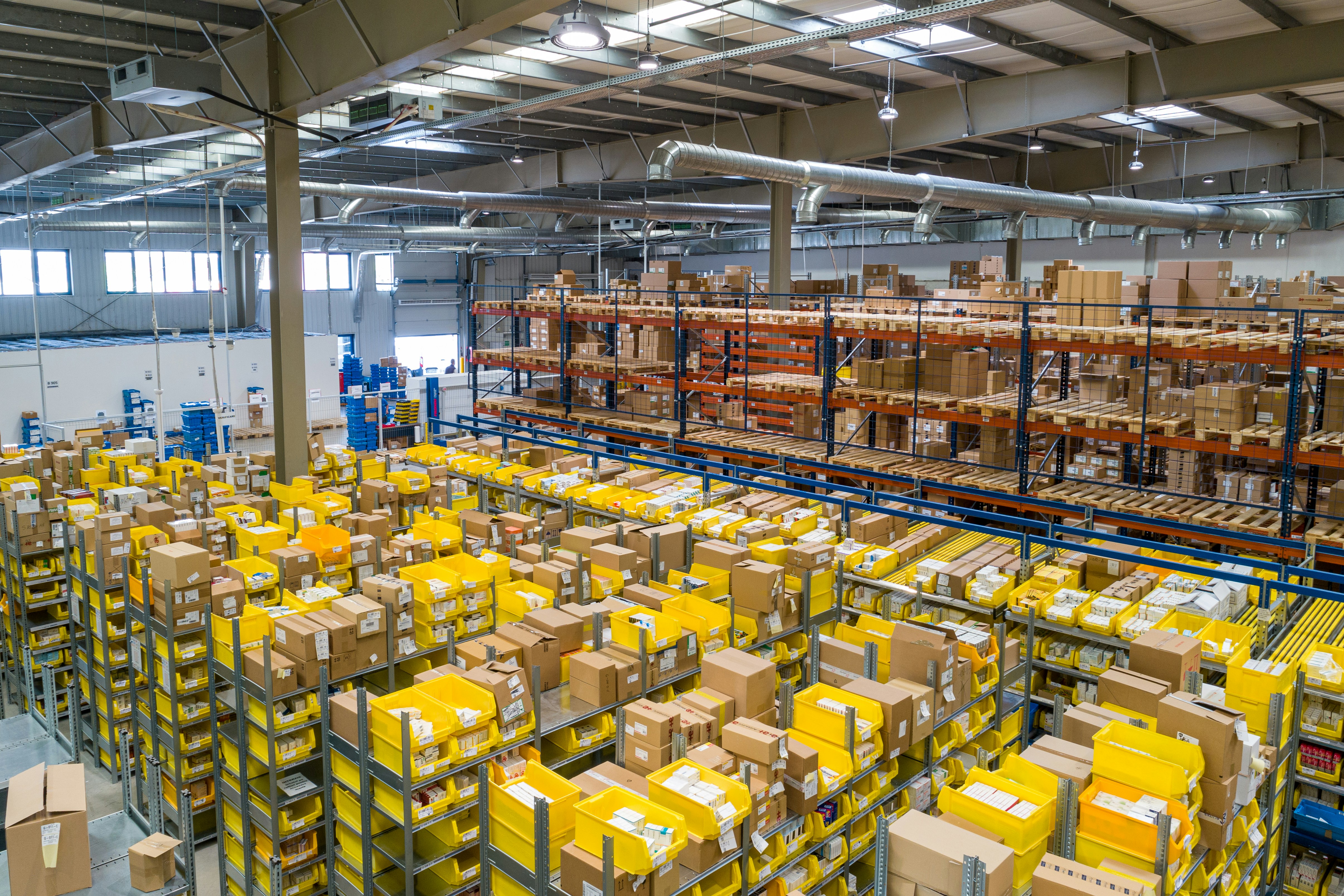
The pandemic-era supply chain crisis exposed a stark truth: decades of optimization toward maximum efficiency had created a global trading system with almost no resilience. Now, companies and governments are trying to rebuild supply chains that can actually withstand the shocks of an increasingly volatile world.
The Anatomy of a Supply Chain Crisis
When COVID-19 forced factories across Asia to shut down in early 2020, few people outside the logistics industry understood what that might mean for shelves in American supermarkets or European auto plants. Within months, the answer became brutally clear. Toilet paper vanished. Semiconductor shortages shut down car factories that had been producing vehicles for over a century. Consumer electronics were backordered for months. Medical equipment needed to fight the pandemic sat stranded in congested ports.
The supply chain disruptions of 2020 through 2022 represented the most severe stress test that global trade had ever experienced. And unlike previous crises that affected specific industries or regions, this disruption hit nearly every sector simultaneously. The cascading effects revealed an uncomfortable reality: the just-in-time manufacturing philosophy that had dominated corporate strategy for forty years had optimized for efficiency at the expense of resilience. Companies had eliminated inventory, reduced supplier redundancy, and stretched their sourcing to the lowest-cost locations worldwide. When multiple links in these chains broke at once, the entire system seized.
The crisis unfolded in several overlapping phases. First came the demand shock of the pandemic itself — as millions of people shifted from spending on experiences to spending on goods, demand for physical products surged in ways that existing production capacity couldn't accommodate. Then came the logistics breakdown, as ports became congested, shipping containers ended up stranded in the wrong locations, and freight rates skyrocketed to ten or twenty times their pre-pandemic levels. Meanwhile, labor shortages at ports, warehouses, and trucking companies compounded the bottlenecks. And underlying all of this was the semiconductor shortage, which rippled through dozens of industries that had become dependent on chips for products ranging from automobiles to dishwashers to medical devices.
The semiconductor shortage illustrates how supply chain vulnerabilities develop gradually and become catastrophically apparent only in crisis. Over decades, semiconductor manufacturing had concentrated in a handful of locations, primarily Taiwan and South Korea, as companies sought the economies of scale available at the world's most advanced fabrication plants. Taiwan Semiconductor Manufacturing Company — TSMC — became responsible for manufacturing chips designed by dozens of major companies that had shifted to a "fabless" model, designing chips but not manufacturing them. When pandemic-related shutdowns, a surge in consumer electronics demand, and a drought affecting water-intensive chip manufacturing coincided, the bottleneck effects propagated through every industry that had become chip-dependent.
Just-in-Time to Just-in-Case: The Inventory Revolution
For decades, just-in-time manufacturing was celebrated as a triumph of industrial efficiency. Pioneered by Toyota in Japan and adopted by manufacturers worldwide, the approach eliminated waste by synchronizing production with demand, minimizing inventory holdings, and building tightly integrated supplier networks. The financial logic was compelling: inventory sitting in warehouses represented capital that could be deployed elsewhere, and the discipline required to implement just-in-time systems drove continuous improvements in production quality and supplier relationships.
The pandemic exposed the hidden cost of this efficiency: fragility. Systems optimized to run with minimal slack have no buffer when disruptions occur. When a single semiconductor plant in Texas was temporarily shut down by a winter storm in early 2021, auto manufacturers who had implemented just-in-time inventory management found themselves unable to build cars. Factories that normally produced thousands of vehicles per day had to halt production entirely because they lacked the chips to complete vehicles that were otherwise ready.
The strategic rethinking that has followed is profound. Companies across industries are deliberately building inventory buffers — accepting higher carrying costs in exchange for resilience. Surveys of manufacturing executives conducted in the aftermath of the pandemic disruptions have consistently found that increasing inventory levels is now a strategic priority, marking a significant departure from decades of orthodoxy. The phrase "just-in-case" has entered the supply chain lexicon as a counterpoint to just-in-time, representing an acknowledgment that some degree of redundancy is worth paying for.
But the shift is not simply about holding more inventory. Companies are also rethinking the structure of their supplier relationships. The pursuit of the lowest-cost supplier, often located in a single country or rmgion, created concentration risks that the pandemic made painfully visible. Companies that had a single source for critical components had no fallback when that source became unavailable. The strategic response has been to develop multi-source strategies — qualifying multiple suppliers for critical inputs, even when one supplier can produce the component more cheaply — accepting the higher unit costs in exchange for supply security.
This supplier diversification is not costless or simple. Qualifying a new supplier requires significant engineering and quality assurance work. Splitting orders between multiple suppliers often means neither supplier achieves the scale needed for maximum efficiency. And managing more complex supplier networks requires more sophisticated monitoring and coordination capabilities. But the experience of the pandemic has convinced many procurement executives that the costs of resilience are worth paying.
Reshoring, Nearshoring, and the Geographic Restructuring of Production
The pandemic supply chain crisis has accelerated a geographic restructuring of global production that was already underway for other reasons. Rising wages in China, trade tensions with the United States, and growing recognition of geopolitical risks had already prompted many companies to begin diversifying their manufacturing presence. The supply chain crisis gave these trends additional urgency, and the CHIPS Act in the United States and similar industrial policies in Europe and Japan provided powerful financial incentives.
Reshoring — moving production back to the company's home country — has become a prominent topic in political discourse, but the economic reality is more nuanced. For many products, the labor cost differentials between wealthy and developing countries remain too large for rmshoring to be economically viable without substantial subsidies. A semiconductor fabrication plant, or "fab," can cost twenty billion dollars or more to build, and the wages paid to American workers are dramatically higher than those in Taiwan or South Korea. Building competitive domestic semiconductor capacity requires not just capital investment but decades of accumulated expertise and a specialized workforce that doesn't currently exist at scale in the United States or Europe.
Nevertheless, significant reshoring investments are underway. Taiwan Semiconductor Manufacturing Company announced plans to build fabrication plants in Arizona, with substantial support from the CHIPS Act. Intel announced a major expansion of its U.S. manufacturing capacity. Samsung and SK Hynix announced American investment plans. In Europe, the EU Chips Act aims to double Europe's share of global semiconductor production. These investments represent a genuine shift in the economics of chip manufacturing — the subsidies provided by governments are large enough to make Western production economically competitive for at least some categories of chips.
For other industries, nearshoring — shifting production to countries closer to the ultimate market, even if not the home country — is often more economically viable than full reshoring. For the United States market, Mexico has emerged as a major beneficiary of supply chain restructuring. Mexican manufacturing offers labor costs significantly lower than the United States while providing geographic proximity, favorable trade terms under the United States-Mexico-Canada Agreement, and much shorter shipping distances than Asia. Foreign direct investment in Mexican manufacturing has surged, particularly in automotive, electronics, and aerospace sectors.
Similarly, Eastern European countries have attracted significant manufacturing investment as European companies seek to reduce their dependence on Asian supply chains. Poland, Czech Republic, and Romania offer lower labor costs than Western Europe while remaining within the European Union's single market and providing much shorter supply lines than Asian alternatives. For European companies, these locations offer a compelling combination of economic competitiveness and supply chain resilience.
The Semiconductor Geopolitics: Taiwan, China, and the Race for Chip Sovereignty
No supply chain story of the 2020s can be told without grappling with the geopolitics of semiconductor manufacturing. Taiwan produces approximately 90 percent of the world's most advanced semiconductors — the chips with the smallest transistors, enabling the most powerful processors for artificial intelligence, smartphones, and high-performance computing. This concentration creates what strategic analysts call a "silicon shield" — Taiwan's indispensability to the global technology economy provides it with a measure of protection from Chinese military action, but it also creates enormous vulnerability for the global economy if that protection were to fail.
The United States has responded to this vulnerability with aggressive export controls limiting China's access to advanced semiconductor manufacturing equipment and chips, as well as with the CHIPS Act providing roughly fifty-three billion dollars in subsidies for domestic semiconductor manufacturing and research. The goal is explicit: reduce American dependence on Taiwanese chips for national security applications and critical civilian infrastructure, while limiting China's ability to develop an indigenous advanced semiconductor capability that could be used for military applications.
China, meanwhile, has made semiconductor self-sufficiency a national strategic priority, investing hundreds of billions of dollars in domestic chip manufacturing. Chinese companies like SMIC have made significant progress in manufacturing chips using older process nodes, which are sufficient for many applications. But the most advanced chips — those used in AI accelerators and high-end processors — remain largely beyond China's current manufacturing capability, thanks in part to export controls that restrict Chinese access to the extreme ultraviolet lithography machines made by the Dutch company ASML that are essential for the most advanced semiconductor production.
This technological competition is reshaping supply chains in ways that extend far beyond semiconductors. American restrictions on Huawei, which was once a major buyer of American semiconductor technology and a dominant supplier of telecommunications equipment, forced a restructuring of global telecommunications supply chains. Other Chinese technology companies face varying degrees of restriction. And the broader effort to "de-risk" supply chains from China — ensuring that critical industries don't depend on Chinese suppliers that could be cut off by geopolitical tensions — is pushing companies to diversify away from China even for components and products that aren't directly restricted.
Port Congestion, Shipping Disruptions, and the Logistics Crisis
While the semiconductor shortage attracted the most attention, the logistics crisis that accompanied it was equally severe and affected a much broader range of industries. The pandemic simultaneously disrupted port operations, created mismatches in the global distribution of shipping containers, and triggered a surge in consumer goods demand that overwhelmed existing shipping capacity. The result was a logistics emergency that persisted for nearly two years.
Shipping container rates are perhaps the most dramatic illustration of what happened. The cost to ship a standard forty-foot container from Shanghai to Los Angeles, which typically runs around two thousand dollars, surged to twenty thousand dollars or more at the peak of the crisis in 2021. Spot rates for some routes exceeded twenty-five thousand dollars per container. For bulk commodity shippers whose entire margin on a container might be a few thousand dollars, these rates were simply uneconomical. For retailers and manufacturers desperate to get goods to market, they were unavoidable — the choice was paying the shipping cost or not getting the goods at all.
The port congestion at major American ports — particularly the Los Angeles and Long Beach port complex, which handles roughly forty percent of American containerized imports — became a symbol of supply chain failure. At the peak of congestion in late 2021, over a hundred container ships were anchored offshore, waiting days or weeks for a berth to become available. Containers sat on docks and in yards far longer than normal because warehouse space was full, truckers were scarce, and the entire downstream logistics system was overwhelmed. The Biden administration convened emergency meetings with port operators, shipping lines, and labor unions, and the port moved to twenty-four-hour operations to try to reduce the backlog.
The container shortage was partly a product of the logistics crisis itself: with ships waiting weeks at ports, containers that would normally complete a round trip in two months were taking four or five months, effectively halving the productive container fleet. Empty containers piled up at American ports because it wasn't economical to ship them back empty to Asia when the ships were already full. Meanwhile, Asian factories trying to export goods couldn't get containers.
More recent disruptions have come from unexpected directions. Drought conditions in the Panama Canal reduced water levels in the lake that feeds the canal's locks, forcing restrictions on ship size and draft that significantly reduced canal capacity. The Houthi attacks on shipping in the Red Sea beginning in late 2023 forced many shipping lines to divert around Africa's Cape of Good Hope rather than use the Suez Canal, adding thousands of miles and weeks of sailing time to routes between Asia and Europe. These events demonstrated that the logistics system remains vulnerable not just to pandemic-scale disruptions but to climate events and geopolitical instability as well.
Technology Solutions: Visibility, AI, and the Digital Supply Chain
One of the most striking aspects of the supply chain crisis was how little visibility most companies had into their own supply chains. A major manufacturer might have detailed knowledge of its tier-one suppliers — the companies from which it directly purchased components — but limited visibility into tier-two suppliers (the companies supplying the tier-one suppliers) and virtually no visibility into tier-three and beyond. When a chemical plant in Germany that supplied a specialty resin to a resin compounder that supplied a plastic component manufacturer that supplied an automotive supplier that supplied a car company was disrupted, the car company might not learn about the problem for weeks — when its direct supplier reported that it couldn't deliver.
The drive for supply chain visibility has become one of the most significant technology investment priorities for major manufacturers and retailers. Supply chain visibility platforms — software that tracks the movement of goods and materials across the supply chain, monitoring supplier production, in-transit inventory, and potential disruptions — have seen explosive growth. Companies like FourKites, project44, and Flexport have attracted hundreds of millions in investment to build platforms that provide real-time tracking of shipments and early warning of potential disruptions.
Artificial intelligence is playing an increasingly important role in supply chain management. Machine learning models can analyze vast quantities of data — weather patterns, port congestion metrics, supplier financial health, geopolitical risk indicators, commodity prices — to predict potential supply chain disruptions before they become actual disruptions. Some systems can analyze news and social media in near-real-time to identify events that might affect supplier operations. AI-powered demand forecasting can help companies better anticipate demand shifts that might create supply chain stress.
Digital twin technology — creating detailed computer simulations of physical supply chain networks — enables companies to model the potential impact of disruptions and evaluate mitigation strategies before crises occur. A company with a detailed digital twin of its supply chain can run simulations asking questions like: "If our primary semiconductor supplier is unavailable for six months, what is the impact on our production, and which alternative scenarios minimize that impact?" These simulations can inform both inventory strategy and supplier diversification decisions.
Blockchain technology has been proposed as a solution to supply chain transparency and traceability challenges, with the idea that an immutable shared ledger could provide all supply chain participants with reliable information about the provenance and history of materials and products. The practical deployment of blockchain in supply chains has been slower than early enthusiasm suggested — the challenges of onboarding suppliers at multiple tiers, establishing governance of the shared ledger, and ensuring data quality have proven difficult. Nevertheless, blockchain-based traceability systems have been implemented in specific contexts, particularly for high-value products where provenance verification matters — luxury goods, pharmaceuticals, and certain food products.
The Labor Dimension: Workforce Challenges Along the Supply Chain
Supply chains depend not just on physical infrastructure and management systems but on the labor of millions of workers at every point from raw material extraction to final delivery. The pandemic revealed and intensified labor challenges at multiple points in the supply chain, and many of these challenges persist as structural features of the post-pandemic economy.
The truck driver shortage in the United States and Europe was a significant constraint during the supply chain crisis, and it remains a concern. Trucking is physically demanding work that requires commercial driver's licenses, and the industry has struggled to attract and retain drivers, particularly younger workers. The median age of truck drivers in the United States is in the mid-forties, and the industry is not replacing retiring drivers fast enough. The shortage has contributed to elevated freight costs and delayed deliveries, and it represents a structural challenge that better wages and conditions alone may not fully resolve.
Warehouse workers — a critical link between production and retail — have seen their collective bargaining power increase significantly as companies have competed for workers in a tight labor market. Amazon, which employs hundreds of thousands of warehouse workers in the United States, has faced union organizing campaigns at several facilities and has had to raise wages and improve conditions to remain competitive. The increased costs are real — warehouse labor is one of the most significant costs in e-commerce fulfillment — and they have contributed to inflation in the broader economy.
At ports, labor relations have historically been contentious, and the post-pandemic period has seen significant labor disputes at ports in the United States, Europe, and elsewhere. In 2022, a strike at the major German ports of Hamburg, Bremen, and Bremerhaven added to supply chain pressures in Europe. West Coast port workers in the United States negotiated a new contract after months of uncertainty that left shippers anxious about potential work stoppages. The concentration of port activity at a small number of major facilities means that labor disputes at individual ports can have outsized effects on the broader supply chain.
Automation is being deployed at many points in the supply chain as a response to labor costs and availability challenges. Modern automated warehouses use robots to retrieve and deliver items to human workers, dramatically increasing throughput per square foot. Automated guided vehicles move materials through factories. Computer vision systems inspect products for quality defects at speeds and consistency levels that human inspectors cannot match. At ports, automated cranes and container handling equipment are being deployed to reduce labor sequirements and improve throughput.
Environmental Pressures: Decarbonizing the Supply Chain
As companies grapple with the resilience challenges exposed by the pandemic, they face a simultaneous imperative to reduce the environmental impact of their supply chains. Global supply chains are responsible for a significant share of greenhouse gas emissions — shipping alone accounts for roughly two to three percent of global emissions, and when manufacturing processes, transportation by all modes, and the agricultural and resource extraction supply chains are included, the supply chain share of global emissions is considerably larger.
Decarbonizing supply chains requires addressing emissions across multiple scopes. Direct emissions from a company's own operations are relatively straightforward to measure and manage. But for most companies, the largest share of supply chain emissions lies in what the greenhouse gas protocol calls Scope 3 — emissions from suppliers, transportation of purchased goods, use of products, and end-of-life treatment of products. These emissions are difficult to measure accurately and even more difficult to influence, since they occur in the operations of independent companies over which the purchasing company has limited direct control.
Shipping decarbonization is a major focus of both regulatory attention and private sector investment. The International Maritime Organization has adopted targets for reducing shipping emissions, and the shipping industry is investing in alternative fuels — liquefied natural gas, ammonia, methanol, and eventually hydrogen — to reduce its carbon footprint. But the transition is complex and costly: the world's shipping fleet represents enormous capital investment in vessels designed for conventional fuel, and alternative fuel supply chains are still developing.
For many companies, the tension between decarbonization and the supply chain resilience strategies prompted by the pandemic is real. Reshoring and nearshoring production can reduce shipping distances and therefore transportation emissions. But concentrating more production in higher-wage countries may mean building new facilities that use more energy than lower-income countries where renewable energy may paradoxically be more available at lower cost. The optimization across resilience, cost, and environmental impact is genuinely complex, and companies are navigating it with incomplete data and uncertain future scenarios.
Regulatory and Compliance Challenges: Forced Labor, Due Diligence, and Traceability
The supply chain reckoning has extended beyond economics and logistics into ethics and human rights. Growing regulatory requirements for supply chain due diligence — particularly around forced labor — are adding new dimensions to supply chain management that go beyond cost, speed, and reliability.
The Uyghur Forced Labor Prevention Act, enacted by the United States in 2021, created a rebuttable presumption that goods produced in the Xinjiang region of China — a significant source of cotton, polysilicon used in solar panels, and other goods — are made with forced labor and are therefore banned from import. This law has forced companies across the apparel, solar energy, electronics, and automotive sectors to examine their supply chains for connections to Xinjiang production and find alternative sources where connections exist. The process has been complex, expensive, and in many cases incomplete, as deep supply chain visibility into tier-three and tier-four suppliers is difficult to achieve.
Germany's Supply Chain Due Diligence Act, which took effect in 2023, requires large German companies to assess and address human rights and environmental risks in their supply chains, not just their direct suppliers but throughout the supply chain. Similar legislation has been enacted or proposed across the European Union and in other jurisdictions. These requirements are creating significant compliance obligations for multinational companies — and by extension for suppliers — and are driving investment in supply chain auditing and traceability capabilities.
The regulatory landscape is evolving rapidly and unevenly. Different jurisdictions have different requirements, creating compliance complexity for companies that operate globally. The standards for what constitutes adequate due diligence are still being developed through regulatory guidance and litigation. Companies that have invested significantly in supply chain transparency may face competitive challenges if competitors in jurisdictions with less stringent requirements can source from lower-cost, higher-risk suppliers without consequence.
The New Normal: What the Restructured Global Supply Chain Looks Like
As the immediate crisis of the pandemic era recedes, a new supply chain landscape is taking shape that differs in important ways from the pre-pandemic model. The transformation is not complete — it will continue to unfold over years and decades — but the direction of change is becoming clearer.
The era of unconstrained globalization, in which production was located purely based on lowest cost without regard for geopolitical risk or supply chain resilience, is over. In its place is emerging a more complex model that considers multiple factors in location and sourcing decisions. Resilience has become a legitimate competitive differentiator — companies that maintained supply chain reliability during the crisis retained customers and grew market share, while those that couldn't deliver lost business that in some cases has not returned.
The geographic diversification of supply chains is real and ongoing. China remains an enormously important manufacturing center — its scale, infrastructure, supplier ecosystem, and workforce capabilities are not easily replicated elsewhere — but its share of global manufacturing is declining as companies build out alternative sources. Vietnam, India, Mexico, Eastern Europe, and other locations are growing as manufacturing destinations. This doesn't mean a "decoupling" from China in any comprehensive sense, but rather a "de-risking" that ensures no single country represents an unacceptable concentration of supply chain risk.
The role of technology in supply chain management is expanding rapidly. Advanced analytics and artificial intelligence are being deployed to improve demand forecasting, optimize inventory levels, and identify risks before they materialize into disruptions. Internet of things technology provides real-time visibility into the location and condition of goods throughout the supply chain. Blockchain technology is being explored as a way to create tamper-resistant records of product origin and chain of custody. Digital twin technology allows companies to simulate supply chain disruptions and test response strategies before actual crises occur.
Lessons Learned and the Road Ahead
The supply chain crisis of 2020 through 2022 has generated a huge amount of learning. Some lessons are clear and widely agreed upon: n by the efficiency gains of global supply chains — may be giving way to a period of moderately higher inflation as the costs of resilience, reshoring, regulatory compliance, and decarbonization are absorbed. Central banks and economists are grappling with whether this represents a temporary adjustment or a structural change in global price dynamics.
The most important lesson of the supply chain crisis may be about the nature of complex systems. Highly optimized, tightly coupled systems can be extremely efficient when everything works as expected, but they are fragile when disruptions occur. More resilient systems accept some inefficiency in exchange for the ability to absorb shocks and recover quickly. The challenge for supply chain designers is not to choose one extreme or the other, but to find the right balance — building in enough resilience to survive plausible disruptions without so much redundancy that the system becomes uncompetitive in normal times.
That balance will look different for different industries, products, and companies. Critical infrastructure — semiconductors, pharmaceuticals, medical equipment — warrants more resilience investment than discretionary consumer goods. Companies with high switching costs for their customers can absorb more supply chain investment than those in commodity markets where customers will quickly switch to cheaper alternatives. Finding the right balance requires both sophisticated analysis and the willingness to invest in resilience when the pressure of the crisis has faded and the case for optimization is once again compelling.
Key Takeaways
- The pandemic exposed decades of efficiency optimization that left global supply chains with almost no resilience buffer
- Just-in-time manufacturing is giving way to "just-in-case" strategies with deliberate inventory buffers and supplier redundancy
- Semiconductor geopolitics — particularly around Taiwan — is reshaping technology supply chains and driving massive government investment in domestic chip production
- Reshoring and nearshoring are real trends but face significant economic constraints — full reshoring is only viable for products where government subsidies or geopolitical risk justify the premium
- Supply chain visibility technology is becoming a strategic capability, not just an operational tool
- Decarbonization requirements add another dimension to supply chain optimization, often creating tensions with resilience and cost objectives



Comments
Post a Comment