The Electric Vehicle Revolution: How EVs Are Reshaping Transportation, Energy, and the Global Economy
The Electric Vehicle Revolution: How EVs Are Reshaping Transportation, Energy, and the Global Economy
A comprehensive analysis of the EV transition, from battery technology and charging infrastructure to geopolitical shifts and the future of mobility.
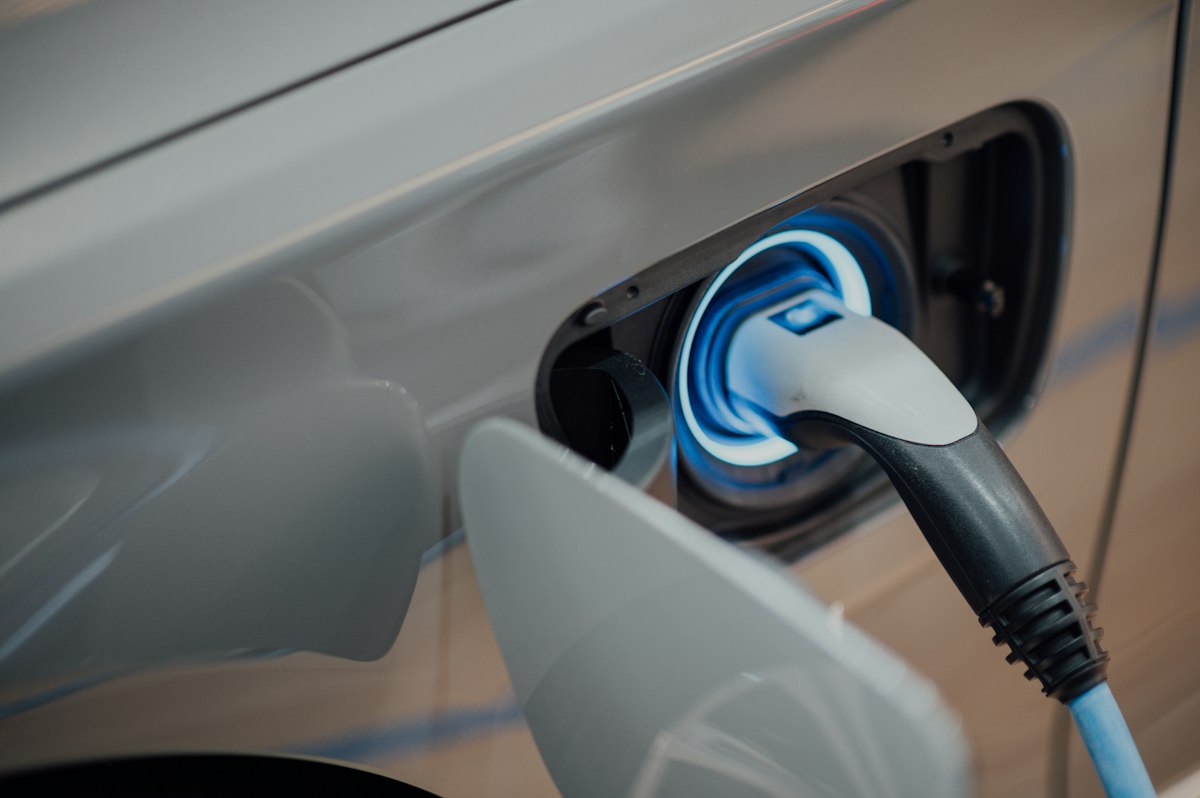
Introduction: The Tipping Point Is Here
In 2010, global electric vehicle sales totaled approximately 17,000 units. By 2023, that figure had exploded to over 14 million — representing a growth of more than 82,000 percent in thirteen years. What was once a niche technology embraced by environmental enthusiasts has become the fastest-growing segment of the global automotive market, reshaping not just how we drive but how we generate energy, structure supply chains, organize geopolitics, and think about urban design.
The electric vehicle revolution is not a future event. It is happening now, at a pace that is surprising even the most bullish analysts. BloombergNEF projects that EVs will account for 75% of all new passenger vehicle sales globally by 2040. The International Energy Agency estimates that the global EV fleet will grow from roughly 40 million vehicles today to over 300 million by 2030 under current policy trajectories — and potentially 400 million if governments accelerate clean energy commitments. These are not incremental changes. They represent a fundamental restructuring of one of the largest industries in human history.
This transformation touches everything: the oil and gas industry faces existential pressure as transportation demand — currently its largest market — begins to erode. Automakers that have built their competitive advantages over a century around internal combustion engine expertise are scrambling to reinvent themselves. New players — Tesla, BYD, NIO, Rivian — are challenging the established order. Lithium, cobalt, nickel, and manganese have become strategic resources. The electrical grid must be rebuilt to accommodate millions of vehicles that are also rolling batteries. And cities are rethinking their streets, parking, and transportation systems in response to a technology that is simultaneously cleaner, cheaper to operate, and more technologically sophisticated than anything that preceded it.
Battery Technology: The Heart of the Revolution
The history of the EV revolution is largely a history of the lithium-ion battery. The fundamental electrochemistry — lithium ions moving between anode and cathode through an electrolyte — was pioneered by John Goodenough, M. Stanley Whittingham, and Akira Yoshino, whose work earned them the 2019 Nobel Prize in Chemistry. But the commercial deployment of lithium-ion technology in EVs at scale required decades of engineering refinement, manufacturing scale-up, and cost reduction that has transformed what was once a laboratory curiosity into the dominant energy storage technology of the modern era.
The cost trajectory of lithium-ion batteries is one of the most remarkable in the history of technology. In 2010, battery pack costs were approximately $1,100 per kilowatt-hour — making EVs dramatically more expensive than internal combustion vehicles on a total-cost basis. By 2023, pack costs had fallen to approximately $140/kWh, and leading manufacturers like CATL and Tesla project costs below $80/kWh by the mid-2020s. At roughly $100/kWh, EVs reach price parity with comparable internal combustion vehicles on an upfront cost basis — a threshold that is the holy grail of the EV industry, because it removes the primary consumer barrier to adoption.
The chemistry of lithium-ion batteries has also evolved substantially. The original lithium cobalt oxide (LCO) chemistry used in early consumer electronics gave way to lithium nickel manganese cobalt oxide (NMC) and lithium nickel cobalt aluminum oxide (NCA) chemistries that offer better energy density and safety for automotive applications. More recently, lithium iron phosphate (LFP) batteries — which eliminate cobalt and use cheaper, more abundant iron phosphate — have experienced a renaissance, particularly in China, where BYD's Blade Battery architecture has made LFP competitive with NMC chemistries on energy density while offering superior safety and longer cycle life.
The next frontier is solid-state batteries — replacing the liquid electrolyte in conventional lithium-ion batteries with a solid material. Solid-state batteries promise significantly higher energy density (potentially enabling ranges exceeding 500 miles per charge), faster charging, improved safety (the liquid electrolyte in conventional batteries is flammable), and longer lifespans. Toyota has been the most vocal champion of solid-state technology, announcing plans to launch solid-state EVs by 2027-28. QuantumScape, backed by Volkswagen, has demonstrated solid-state cells with impressive performance characteristics in laboratory settings. But manufacturing solid-state batteries at automotive scale and cost remains enormously challenging — the interface between the solid electrolyte and electrode materials is difficult to maintain under the repeated expansion and contraction of charging cycles.
The Competitive Landscape: Legacy vs. Disruptors
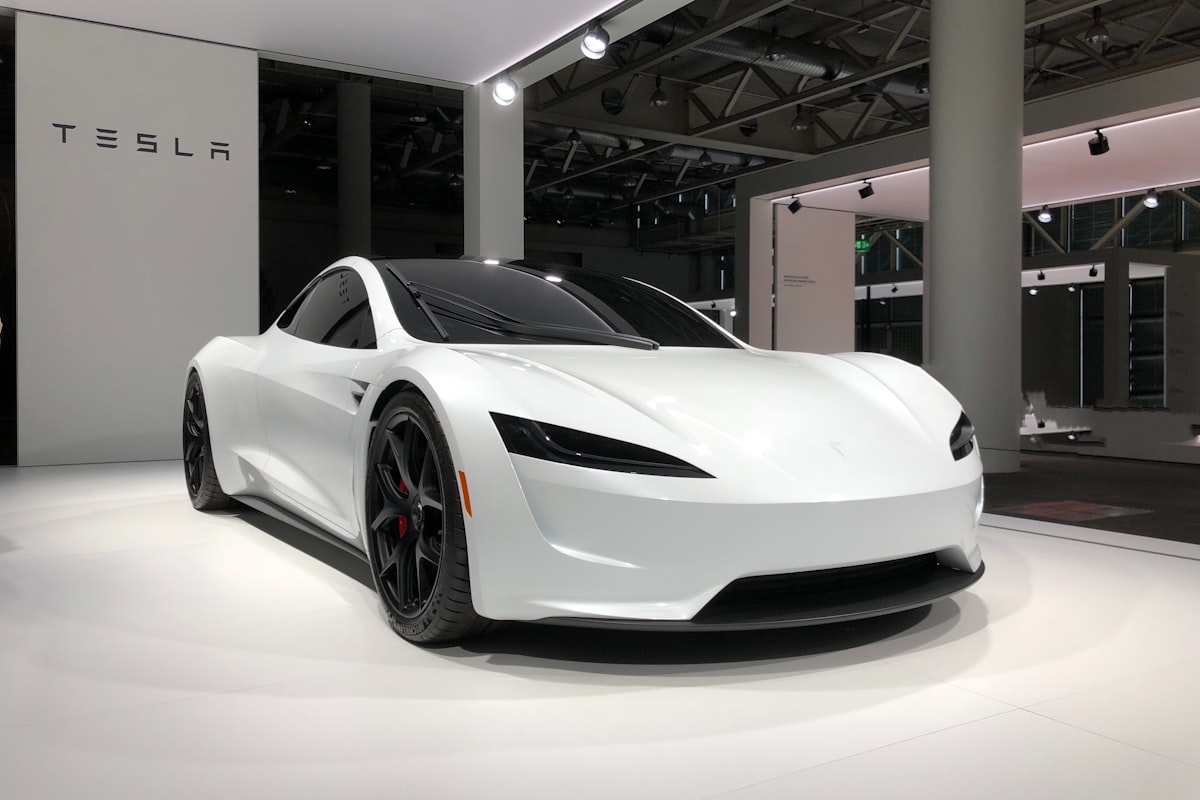
No company has done more to accelerate the EV transition than Tesla. Founded by Elon Musk, JB Straubel, Martin Eberhard, Marc Tarpenning, and Ian Wright in 2003, Tesla proved that an electric vehicle could be not just environmentally superior but also technologically superior and aspirationally desirable. The Model S, launched in 2012, demonstrated that EVs could offer sports car performance, 200+ mile range, and a premium driving experience that rivaled the best luxury sedans. Tesla's vertically integrated approach — controlling battery technology, software, manufacturing, and direct-to-consumer sales — gave it cost and technological advantages that legacy automakers spent years scrambling to replicate.
Tesla's Gigafactory concept — purpose-built, highly automated battery manufacturing facilities at unprecedented scale — demonstrated that battery costs could be radically reduced through manufacturing innovation. The Gigafactory Nevada, operational since 2016, was at the time the largest building by footprint on Earth. Tesla now operates Gigafactories in Nevada, Shanghai, Berlin, and Texas, with combined production capacity of several hundred thousand vehicles per year. In 2023, Tesla delivered approximately 1.8 million vehicles — making it one of the highest-volume luxury automakers in the world.
But Tesla's dominance is increasingly contested, particularly by Chinese manufacturers. BYD — Build Your Dreams — surpassed Tesla in total EV and plug-in hybrid sales in 2023, selling approximately 3 million new energy vehicles. BYD's vertically integrated model rivals Tesla's: the company manufactures its own batteries, semiconductors, and electric motors. Its vehicle lineup spans from affordable city cars to premium sedans and luxury SUVs, and the company is aggressively expanding internationally into Europe, Southeast Asia, and Latin America. BYD's scale and cost competitiveness — particularly in the affordable EV segment below $30,000 where Tesla does not currently compete — make it arguably the most formidable competitor in the global EV market.
Legacy automakers are in the midst of the most expensive and strategically uncertain transformation in their histories. Volkswagen Group has committed to investing over €180 billion in EVs and digital technology through 2027. General Motors has pledged to sell only zero-emission vehicles by 2035. Ford has created a separate EV organization, Model e, with $50 billion in planned EV investment. Stellantis, Toyota, Hyundai-Kia, and Mercedes-Benz have all announced transformational EV commitments worth tens of billions each.
But executing these commitments is proving enormously difficult. Legacy automakers must simultaneously maintain profitable ICE vehicle production — which funds the EV transition — while building EV expertise, battery manufacturing capability, and software competency that they currently lack. The transition is complicated by the fact that EV manufacturing requires different skills, different supply chains, and dramatically fewer workers per vehicle (EVs have roughly 20 moving parts vs. 2,000 in an ICE vehicle), creating deep labor tensions particularly with unionized workforces that fear job losses. GM's Ultium EV platform has been plagued by production delays and cost overruns. Ford has lost biolor: #1a2a1a; margin-bottom: 20px;">The shift from an oil-dependent transportation system to an EV-dependent one does not eliminate resource dependencies — it transforms them. Oil is replaced by lithium, cobalt, nickel, manganese, graphite, and rare earth elements for motors. The geography of these resources is radically different from oil's geography, creating new geopolitical dependencies and supply chain vulnerabilities that governments and automakers are urgently working to address.
Lithium is the most fundamental EV mineral, serving as the active element in virtually all lithium-ion batteries. The "Lithium Triangle" of Argentina, Bolivia, and Chile holds over half the world's known lithium reserves, mostly in the form of brine deposits in high-altitude salt flats. Australia holds the largest share of hard-rock lithium production. The IEA estimates that lithium demand will grow by 40-fold by 2040 under its Sustainable Development Scenario. Meeting this demand requires massive investment in mining, processing, and refining — and the processing capacity is heavily concentrated in China, which accounts for over 60% of global lithium chemical processing even though it holds a smaller share of raw lithium reserves.
Cobalt is the most ethically fraught of the EV minerals. Approximately 70% of global cobalt production comes from the Democratic Republic of Congo — and a significant portion of Congolese cobalt comes from artisanal small-scale mining operations that have been documented using child labor in dangerous conditions. Major automakers and battery manufacturers have invested heavily in supply chain transparency and auditing, and the shift toward LFP batteries (which contain no cobalt) and high-nickel NMC chemistries (which use substantially less cobalt per kWh) has reduced the EV industry's cobalt intensity. But the human rights dimension of cobalt supply chains remains a reputational and ethical challenge for the industry.
China's dominance in battery supply chains — encompassing mining of some minerals, processing of most minerals, cell manufacturing, and battery pack assembly — has become a major strategic concern for Western governments. China accounts for approximately 75% of global lithium-ion battery manufacturing capacity. CATL (Contemporary Amperex Technology Co. Limited), the world's largest battery manufacturer, holds a global market share of approximately 37% — more than the next five manufacturers combined. This concentration represents a strategic vulnerability for the U.S., Europe, and other economies seeking to build domestic EV industries.
The U.S. Inflation Reduction Act (IRA) of 2022 has restructured EV supply chains through a combination of consumer tax credits and domestic content requirements. To qualify for the full $7,500 EV tax credit, vehicles must be assembled in North America, and their batteries must meet escalating thresholds for North American critical mineral sourcing and battery component manufacturing. These requirements have triggered a wave of battery manufacturing investment in the U.S.: LG Energy Solution, SK On, Panasonic, Samsung SDI, and CATL (through partnerships with Ford and other automakers) have announced over $100 billion in U.S. battery manufacturing investments since the IRA's passage. The EU's Critical Raw Materials Act and its own battery regulation similarly aim to build European supply chain resilience.

Grid Integration: EVs as Both Challenge and Opportunity
Adding millions of EVs to the electrical grid creates significant challenges — and, paradoxically, significant opportunities. The challenge is straightforward: a typical EV has a battery pack of 50-100 kWh — equivalent to several days of electricity consumption for an average home — and charging at Level 2 rates can draw 7-11 kW, roughly comparable to running an entire house's major appliances simultaneously. If millions of drivers plug in their cars simultaneously after arriving home from work in the late afternoon, the resulting demand spike could overwhelm distribution infrastructure and drive up wholesale electricity prices during an already stressed period of grid operation.
Smart charging — using software to time EV charging to periods of low electricity demand and low prices, typically overnight — addresses this challenge while also saving EV owners money. California, where grid stress is most acute and EV adoption most advanced, has deployed time-of-use electricity pricing that incentivizes overnight charging. Utilities including Pacific Gas & Electric have piloted programs that compensate EV owners for making their vehicle charging responsive to real-time grid conditions.
Vehicle-to-grid (V2G) technology extends this concept: bidirectional chargers allow EVs to not just receive power but also export it back to the grid, making the fleet of connected EVs a massive distributed battery storage resource. Ford's F-150 Lightning has built-in V2G capability with a maximum export of 9.6 kW — enough to power an average home for several days during an outage. Nissan's LEAF, with its CHAdeMO bidirectional charging capability, has been deployed in V2G pilot programs in Japan and Europe for years. A future grid with hundreds of millions of EVs, each with 60+ kWh of storage capacity and V2G capability, could provide an enormous buffer for absorbing intermittent renewable energy production and smoothing demand spikes — essentially making the car fleet a distributed energy storage system of unprecedented scale.
The electricity required to power the global EV transition is substantial: the IEA estimates that a fully electrified global passenger vehicle fleet would require approximately 3,000 TWh of additional electricity annually — roughly the current electricity consumption of India and Japan combined. Generating this electricity from renewable sources is essential for the climate benefits of electrification to be fully realized. An EV powered by coal electricity has a higher lifecycle carbon footprint than a conventional hybrid in some grid configurations. But even on today's grids — which are rapidly decarbonizing — EVs emit substantially less CO2 on a lifecycle basis in most countries. As grids green, the climate advantage of EVs widens automatically and continuously.
Economic Impact: Winners, Losers, and the Labor Transition
The EV transition is one of the most significant industrial restructurings in modern economic history, creating new industries and displacing established ones. The winners are clear: battery manufacturers, mining companies with exposure to lithium and nickel, electricity utilities, software companies serving the EV ecosystem, and new EV brands that are building competitive positions in a market that is still being defined. The losers are also clear: oil companies facing long-term demand destruction in their largest market, traditional auto parts suppliers whose products are not needed in EVs, and gasoline stations facing an uncertain future.
The labor dimension is particularly fraught. The global automotive industry employs approximately 8 million people directly and an additional 40-50 million in supplier and downstream industries. EVs require approximately 30-40% fewer labor hours to assemble than equivalent ICE vehicles, due to fewer components and simpler powertrain assembly. The U.S. auto parts industry employs over 700,000 workers — many in components like exhaust systems, fuel injectors, transmissions, and radiators that have no EV equivalent. The United Auto Workers union's landmark 2023 contract negotiations with Ford, GM, and Stellantis were shaped by members' existential anxiety about the EV transition, leading to agreements that included labor protections at battery plants and right-of-first-refusal for workers displaced from ICE production.
The geographic distribution of EV manufacturing differs significantly from ICE manufacturing. Tesla's Gigafactories are in Nevada and Texas, not in Michigan. Rivian is in Normal, Illinois. Most of the new battery plant investments triggered by the IRA are in southern states — Tennessee, Georgia, Kentucky, South Carolina — that have lower labor costs and are not traditional auto industry strongholds. This geographic shift risks hollowing out established Midwestern auto communities even as it creates new opportunities elsewhere. Managing this transition justly — ensuring that workers and communities that built their livelihoods around the old industry can participate in the new one — is one of the central policy challenges of the EV era.
EV ownership economics are increasingly favorable. While purchase prices remain higher than comparable ICE vehicles in many segments (though this gap is narrowing rapidly), EVs have significantly lower operating costs: electricity is cheaper than gasoline on a per-mile basis in virtually every market; maintenance costs are lower because EVs lack oil, transmission fluid, spark plugs, belts, and many other components that require periodic replacement; and brake life is extended by regenerative braking. A 2021 Consumer Reports study found that EV owners spend on average 40% less on maintenance than ICE vehicle owners. Over a typical 10-year ownership period, these savings can offset a meaningful portion of the EV purchase premium.
Policy and Regulation: Government as the Accelerant
Government policy has been the single most powerful driver of EV adoption, and the policy environment has shifted dramatically in favor of electrification in recent years. The two most consequential policy levers are ZEV mandates — regulations requiring automakers to sell increasing percentages of zero-emission vehicles — and consumer incentives that reduce the purchase price of EVs.
The European Union has adopted some of the world's most aggressive EV mandates, banning the sale of new internal combustion passenger cars and light commercial vehicles from 2035. This effectively requires all new cars sold in the EU after 2035 to be zero-emission — a decision that is forcing European automakers to bet their futures on electrification. The UK has set a similar 2035 deadline. California, which sets vehicle emissions standards followed by over a dozen other U.S. states, has adopted Advanced Clean Cars II regulations requiring 100% zero-emission new car sales by 2035. Norway — already the global leader in EV market share at over 80% of new car sales — demonstrates what can be achieved through sustained and generous policy support including purchase tax exemptions, free parking, reduced toll fees, and HOV lane access.
China's EV policy has been the most consequential in absolute terms because of the scale of its auto market. China deployed a comprehensive suite of EV policies beginning around 2009: purchase subsidies reaching tens of thousands of yuan per vehicle, exemptions from license plate lotteries and restrictions in major cities, aggressive fuel economy standards for ICE vehicles, and requirements for automakers to generate New Energy Vehicle credits. These policies helped China become the world's largest EV market, accounting for over half of global EV sales in 2023. While China has phased out direct purchase subsidies as its EV industry matured, other policy supports remain, and Chinese automakers have used their domestic scale as a springboard to compete internationally.
Beyond Passenger Cars: Commercial Vehicles, Two-Wheelers, and Ships
The EV revolution extends well beyond the passenger cars that dominate public attention. Commercial vehicles — trucks, buses, and delivery vans — represent a disproportionate share of transportation emissions because of their high utilization rates, and their electrification is advancing rapidly. Electric buses have found their most traction in China, where BYD and Yutong have deployed hundreds of thousands of electric buses in urban fleets. Shenzhen became the world's first major city with an all-electric bus fleet in 2017 — operating over 16,000 electric buses on its city routes. European cities including Amsterdam, London, and Oslo have committed to all-electric bus procurement. Several major U.S. cities have announced similar commitments.
Electric trucks face greater challenges than passenger cars because of the weight and range demands of long-haul freight — a fully loaded 18-wheeler might travel 500+ miles per day and cannot afford the downtime of long charging stops. Tesla's Semi, which entered limited production in 2022, claims a 500-mile range with a full load and ultra-fast Megacharger infrastructure. Freightliner Cascadia and Volvo FH Electric are targeting regional distribution routes where daily miles are lower. For long-haul applications, hydrogen fuel cell trucks — using hydrogen to generate electricity on board — may have advantages over pure battery-electric, and companies like Nikola, Hyzon, and Daimler Truck are developing fuel cell commercial vehicle platforms.
Two-wheelers and three-wheelers — the dominant form of personal mobility in many Asian and African countries — are electrifying rapidly. India, the world's largest two-wheeler market, is seeing explosive growth in electric two-wheelers driven by fuel cost savings and government incentives. In Vietnam, electric scooters from VinFast are challenging Honda's and Yamaha's market dominance. In China, electric two-wheelers outnumber EVs by a factor of 30 or more. These small vehicles have an outsized climate impact opportunity because the ICE two-wheelers they replace are often poorly maintained and highly polluting relative to their size.
Maritime shipping — responsible for approximately 3% of global greenhouse gas emissions — faces different challenges and timelines. Ships have large energy storage requirements and long operational lives, making the transition harder. Battery-electric ferries are already operating successfully on shorter routes in Norway, Denmark, and elsewhere. For ocean-going vessels, green ammonia and methanol produced from renewable electricity are emerging as the most promising zero-carbon fuel options, and major shipping lines including Maersk have begun ordering vessels capable of running on these fuels.
The Software Dimension: EVs as Rolling Computers
One of the most underappreciated aspects of the EV revolution is that it is also a software revolution. Modern EVs are, fundamentally, computers that happen to drive. Tesla's Model 3 contains over 100 million lines of software code. The vehicle's performance, efficiency, safety systems, driver assistance features, and even its personality are defined not by mechanical engineering but by software — and that software can be updated remotely, overnight, continuously improving the vehicle throughout its life.
Tesla has used this capability to deliver substantial performance improvements, new features, and even increased range to vehicles already on the road through over-the-air updates. The Model S Long Range has received multiple range improvements through software updates that optimized battery management algorithms without any hardware changes. Tesla's Full Self-Driving (FSD) software — an advanced driver assistance system — is being progressively improved and delivered to existing vehicles through software updates, creating a platform where hardware purchased years ago is still receiving new capabilities.
Legacy automakers have struggled to match this software capability because their organizational structures, development processes, and supplier relationships were built around hardware-centric product development cycles measured in years, not the continuous deployment cycles that software companies operate on. Volkswagen's Cariad software subsidiary has become a cautionary tale — billions invested, multiple vehicle launch delays, and persistent quality problems. GM, Ford, and Stellantis have all restructured their software organizations and processes in attempts to build the capability internally. The competitive advantage of software — and the ability to deliver continuous improvements that deepen customer relationships over time — may ultimately be as important as battery technology in determining which automakers win the EV era.
Environmental Impact: The Real Climate Math
The climate case for EVs is compelling but nuanced. On a well-to-wheel lifecycle basis — accounting for all greenhouse gas emissions from fuel extraction or electricity generation through vehicle operation — EVs emit substantially less CO2 than conventional ICE vehicles in most grid configurations. A 2021 analysis by Transport & Environment found that a battery-electric car driven in Europe today produces approximately three times less CO2 over its lifetime than a comparable gasoline car, and that this advantage will grow to five times less as European grids decarbonize by 2030.
The manufacturing phase is where EVs carry a temporary climate penalty: battery production is energy-intensive, and a new EV requires approximately 50-70% more greenhouse gas emissions to manufacture than an equivalent ICE vehicle. But this "carbon debt" is typically repaid within 1-3 years of operation, after which EVs continue to produce climate benefits for the remainder of their lives. As battery manufacturing decarbonizes through the use of renewable energy in production (CATL has committed to carbon-neutral manufacturing by 2025), the manufacturing phase penalty shrinks further.
End-of-life battery management is a growing concern. Lithium-ion batteries degrade over time, eventually reaching end-of-life for automotive purposes at approximately 70-80% of original capacity. Second-life applications — redeploying retired EV batteries as stationary grid storage, where the lower energy density is less problematic — can extend their useful lives by a decade or more. Nissan, Volkswagen, and others have piloted second-life battery programs. Ultimately, all batteries must be recycled to recover valuable materials including lithium, cobalt, nickel, and copper. Battery recycling infrastructure is being built out by companies including Redwood Materials (founded by Tesla co-founder JB Straubel), Li-Cycle, and Umicore. Achieving high recovery rates for critical minerals will be essential for both the environmental and economic sustainability of the EV transition.
The Future: Autonomous Vehicles and Mobility as a Service
The EV transition intersects with another transformative technology trend: the development of autonomous vehicles. Self-driving technology and EV technology are natural complements: EVs' software-centric architecture makes them better platforms for autonomous driving systems than ICE vehicles, and the robotaxi use case — autonomous EVs operating in commercial ride-hailing fleets — requires zero-emission vehicles to meet air quality standards in the urban environments where they'll operate.
Waymo, the Alphabet subsidiary formerly known as Google's self-driving car project, has deployed commercial autonomous ride-hailing services in Phoenix, San Francisco, and Los Angeles using an all-electric vehicle fleet. Cruise, the GM subsidiary, operated autonomous robotaxi services before a series of regulatory setbacks and safety incidents in 2023. Tesla's FSD system, while not fully autonomous by the SAE definition, represents the most widely deployed driver assistance system in the world, with over 400 million miles of FSD beta driving data accumulated.
The convergence of EVs, autonomy, and mobility-as-a-service platforms could fundamentally reshape urban transportation. In a world where autonomous electric vehicles are available on demand at low cost, private car ownership — particularly in dense urban areas — becomes economically irrational for many households. A shared autonomous EV fleet could keep vehicles in near-continuous use (maximizing asset utilization), charging opportunistically when demand is low, and reducing the total number of vehicles needed to serve a given population by 80-90% compared to a privately owned vehicle fleet. This could dramatically reduce the land area consumed by parking (which accounts for an estimated 30% of urban land area in American cities), enabling new uses for that space while also reducing traffic congestion and vehicle emissions.
Conclusion: Navigating the Transition
The electric vehicle revolution is real, accelerating, and irreversible. The technology has crossed the threshold of competitiveness. The policy environment is decisively supportive in the world's largest markets. Consumer awareness and interest are growing rapidly. The only questions that remain are how fast the transition will proceed and whether the enabling infrastructure — charging networks, battery supply chains, grid capacity, skilled manufacturing labor — will be built quickly enough to support the demand that policy and economics are creating.
For individuals, the calculation is increasingly straightforward: if you drive a meaningful number of miles annually, an EV will likely save you money over a typical ownership period while delivering a superior driving experience and reducing your personal carbon footprint. For businesses, the EV transition represents both an enormous opportunity and a significant disruption risk, depending on where in the automotive value chain they sit. For governments, the challenge is navigating the transition in ways that achieve climate goals, build domestic industrial capacity, ensure energy security, and protect workers and communities whose livelihoods are tied to the departing order.
The internal combustion engine had a 130-year run as the dominant transportation technology. Its successor — the battery-electric vehicle — is only beginning its reign. The decades ahead will see continuing rapid advancement in battery energy density, charging speed, vehicle performance, and autonomous capability. The electric vehicle is not just a cleaner car. It is the foundation of a new transportation paradigm — and the transformation it is driving will touch every aspect of how we move, how we power our world, and how we organize our cities and economies.
Key Takeaways
- EV sales exceeded 14 million globally in 2023, growing from virtually zero a decade earlier; BloombergNEF projects EVs at 75% of new car sales by 2040.
- Battery pack costs have fallen from $1,100/kWh in 2010 to approximately $140/kWh in 2023, approaching the ~$100/kWh price parity threshold with ICE vehicles.
- China's BYD surpassed Tesla in total new energy vehicle sales in 2023, and Chinese manufacturers are rapidly expanding internationally.
- The U.S. Inflation Reduction Act has triggered over $100 billion in domestic battery manufacturing investment, reshaping North American supply chains.
- Critical minerals — particularly lithium, cobalt, and nickel — are the new strategic resources, with China controlling the majority of processing capacity.
- Vehicle-to-grid technology could turn the global EV fleet into a massive distributed energy storage resource supporting renewable integration.
- EVs produce approximately three times less lifecycle CO2 than gasoline cars on current European grids, with the advantage growing as grids decarbonize.
- The convergence of EVs, autonomy, and mobility-as-a-service could fundamentally reshape urban transportation and land use.
Published on September 4, 2026 | Tags: Electric Vehicles, EV Revolution, Battery Technology, Clean Energy, Automotive Industry



Comments
Post a Comment